The surge in steel, rubber, and chemical prices driven by geopolitical instability in West Asia is not merely headline news — it directly challenges the growth blueprint you’ve been charting for your manufacturing operations in India. As you navigate an era focused on aggressive expansion, localization, and scaling exports, understanding and mitigating the impact of these raw material cost escalations has become critical to safeguarding your competitive edge.
Why This Development Demands Your Strategic Attention
When key input costs rise abruptly, they ripple through your entire value chain, squeezing margins and threatening your ability to price competitively on the global stage. The stakes are especially high for manufacturers in steel- and chemical-intensive sectors such as automotive, heavy machinery, electronics, and specialty chemicals. Your capacity to absorb or manage these inflationary pressures will shape not only immediate profitability but also your longer-term positioning as India pushes to deepen its manufacturing footprint.
“In manufacturing, scale matters — but resilience and precision are what create durable advantage.”
The Current Landscape: Price Pressures and Supply Chain Volatility
The West Asia conflict has led to heightened uncertainties in sourcing critical raw materials worldwide, with India’s manufacturing clusters feeling the strain. Steel prices have surged due to disrupted supply and elevated global demand, while rubber and chemical inputs have faced similar inflationary pushes fueled by supply chain constraints and geopolitical risk premiums.
This environment puts you in a challenging spot: either absorbing costs and squeezing margins or passing them onto customers—both of which can impact your market share and growth plans. The concentration of suppliers in geopolitically sensitive regions exacerbates these pressures, emphasizing the need to rethink sourcing and supply strategies.
Business and Manufacturing Implications You Must Consider
The rapid rise in raw material prices changes the calculus of operations and logistics. For your manufacturing clusters, this means confronting:
- Margin compression: Without offsetting measures, profitability could be eroded as input costs surge.
- Supply chain fragility: Dependency on volatile regions makes your procurement vulnerable to disruptions.
- Cost pass-through challenges: Market dynamics may limit your ability to increase product prices without affecting demand.
- Investment recalibration: Expansion and capacity creation plans may need revision considering input cost inflation.
Your Strategic Imperatives: Navigating the Inflationary Challenge
To turn these challenges into opportunities, you should consider a multi-pronged approach grounded in supply chain resilience, operational excellence, and technology-led efficiency:
- Diversify and localize sourcing: Accelerate the ‘China+1’ strategy by expanding your supplier base beyond geopolitical hotspots and strengthening local procurement within India’s industrial corridors.
- Leverage government incentives: Tap into production-linked incentives (PLI) and infrastructure schemes designed to support cost-effective scale and local value addition.
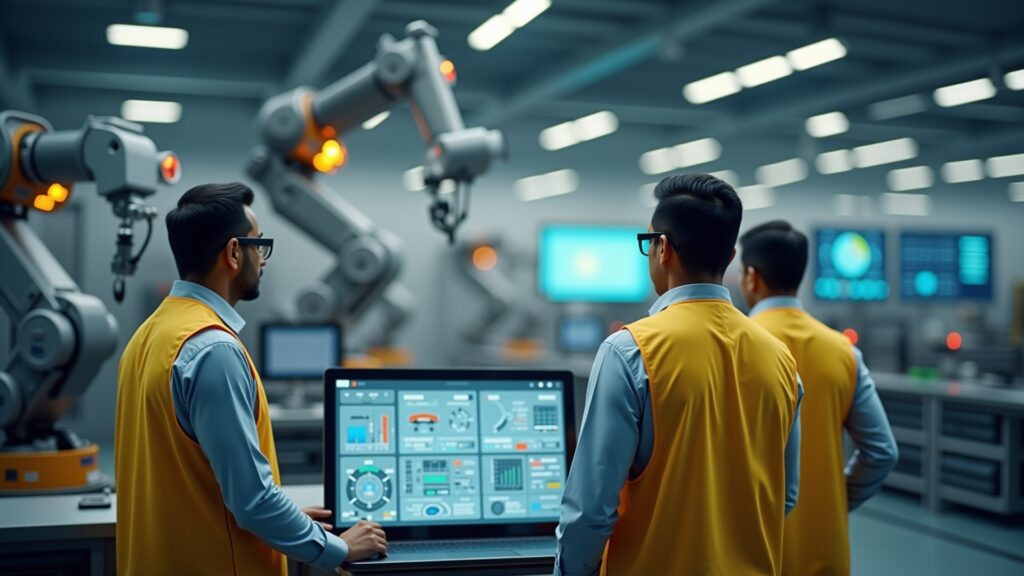
- Invest in automation and smart factories: Deploy industrial AI, automation, and digital supply chain management tools for better demand forecasting, inventory optimisation, and reduced wastage.
- Drive product and process innovation: Enhance product value through engineering innovation and explore alternative materials or process improvements to mitigate input cost dependence.
“The real edge is not only in producing more, but in producing faster, smarter, and closer to where demand is shifting.”
Actionable Takeaways for Manufacturing Leaders and Investors
- Understand supply chain risk: Map your supplier dependencies and assess geopolitical risks associated with key raw materials.
- Monitor cost trends: Keep a close watch on global commodity prices and early signals of supply disruptions.
- Accelerate digital adoption: Prioritize investments in predictive analytics and AI-driven supply chain systems for agility.
- Engage with policy: Collaborate with industry bodies and government initiatives to ensure support mechanisms align with your scaling objectives.
- Plan for resilience: Build inventory buffers strategically and explore contract structures that share risk with suppliers.
Expert Insight
“When automation, supply-chain discipline, and execution quality align, manufacturing growth becomes far more sustainable.”
Risks and Challenges: Navigating an Uncertain Road Ahead
The key risk lies in underestimating the duration and depth of raw material price shocks. Overreliance on unstable supply pockets or delayed investments in technology and supply chain measures could impair your competitive standing. Furthermore, abrupt policy shifts or global economic slowdowns could compound these challenges.
What You Should Watch Next
Keep an eye on geopolitical developments in West Asia and broader global commodity market trends. Also, track India’s evolving industrial policies, especially related to localization drives, infrastructure spending, and trade incentives. The pace and success of smart factory adoption and digital supply chain initiatives within your industry will also signal shifts in competitive dynamics.
Conclusion: Seize the Moment to Future-Proof Your Manufacturing Enterprise
Rising steel, rubber, and chemical prices amid the West Asia conflict are more than a cost issue—they represent a strategic inflection point for your manufacturing business in India. By embracing supply chain diversification, investing decisively in industrial technology, and utilizing government-supported schemes, you position your operations not just to withstand turbulence but to accelerate growth and global competitiveness.
As you recalibrate for this new reality, remember: the strength of India’s manufacturing growth will come from your strategic foresight and operational agility in the face of global uncertainties.