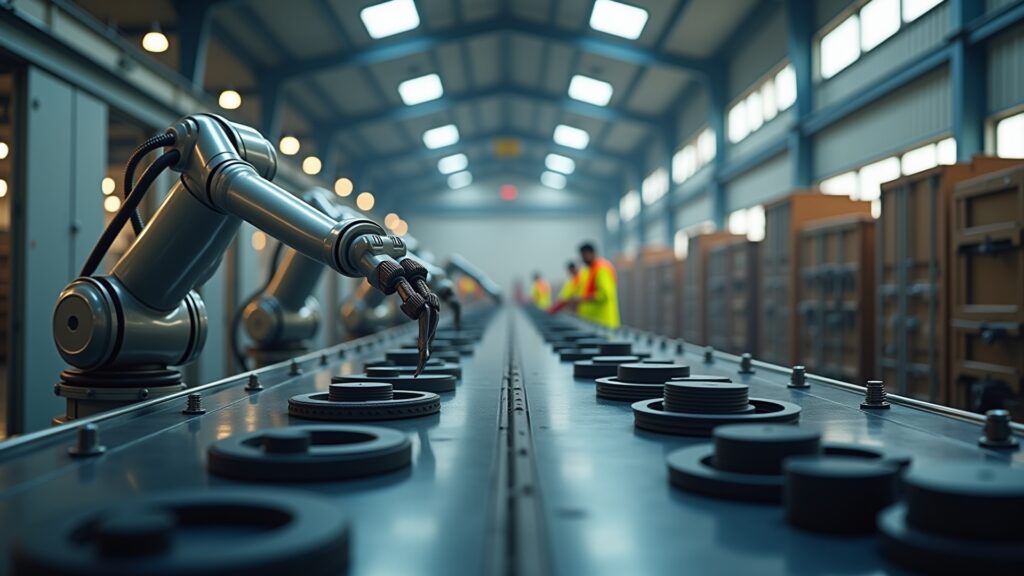
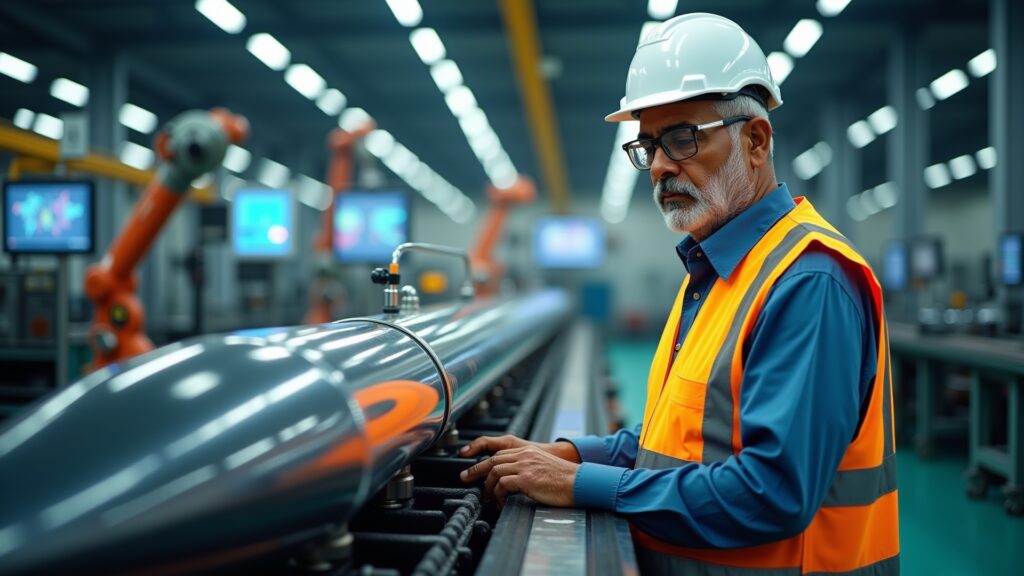
As you steer your manufacturing enterprise through evolving market dynamics, understanding India’s manufacturing growth sentiment in Q4 offers critical insights. Confronted with rising raw material costs, Indian manufacturers have nevertheless exhibited a positive outlook—a sign of resilience and strategic adaptability that can influence your business decisions, supply chain planning, and investment strategies.
Why This Manufacturing Sentiment Matters to You
Your manufacturing operations depend on a complex web of cost management, supply chain robustness, and competitive agility. When raw material prices soar, it puts direct pressure on margins, forcing you to revisit strategies around sourcing, production efficiency, and market positioning. India’s sustained positive manufacturing sentiment thus signals a broader capability across the sector to absorb these cost shocks without derailing growth. This resilience can offer you blueprints for weathering cost volatility while pursuing expansion and innovation.
What Is Happening in India’s Manufacturing Sector?
According to the Federation of Indian Chambers of Commerce and Industry (FICCI), the manufacturing sector maintained a robust confidence level in Q4 despite increasing raw material costs. The sector’s optimism emerges from a backdrop of strategic localisation initiatives and global supply chain realignments that are reshaping how factories operate and compete globally.
This positive outlook is not simply a sentiment; it reflects tangible industrial realities. Indian manufacturers are not retreating in the face of cost pressures but are instead leveraging automation, advanced manufacturing processes, and supply chain optimisation to sustain growth trajectories. The global push for localised production—often dubbed as ‘China+1’ strategy by multinational companies—further reinforces India’s position as a manufacturing hub of choice.
Key Business and Market Impact for Your Manufacturing Enterprise
Rising raw material costs traditionally trigger caution, often leading to scaled-back production or margin compression. Yet, India’s Q4 sentiment shows that enterprises are deploying technology and process innovation to sidestep these pitfalls. For your factory, this means integration of automation and industrial AI can enhance operational resilience and offset cost inflation.
Moreover, policy incentives, like the Production Linked Incentive (PLI) schemes, complement your internal efforts by encouraging capacity expansion and technology adoption. These policies don’t just soften cost impacts; they actively drive competitiveness by rewarding scale-up and efficiency improvements. This environment creates fertile ground for your manufacturing business to elevate export readiness and product quality.
Strategic Analysis: Adaptation over Contraction
The resilience witnessed in India’s manufacturing sector underscores a strategic shift—from reactionary cost management to proactive industrial scaling with value addition at the core. This means your growth decisions should prioritize:
- Technology adoption: Invest in smart factory initiatives that leverage automation and real-time data analytics to increase precision and reduce wastage.
- Supply chain integration: Develop a trusted local supplier ecosystem to reduce dependency on volatile global raw material markets.
- Product innovation: Focus on engineering excellence to differentiate your products, particularly for export competitiveness.
- Operational efficiency: Emphasize lean manufacturing and energy-efficient processes to manage both cost and sustainability.
“In manufacturing, scale matters — but resilience and precision are what create durable advantage.”
By embedding these priorities, you reinforce your factory’s strategic positioning against external cost shocks and global market pressures.
Practical Takeaways for Manufacturing Leaders and Investors
- Understand the evolving cost landscape: Monitor raw material trends and assess how automation can buffer your margins.
- Leverage policy incentives: Align your capital expenditure plans with government schemes like PLI to maximize growth potential.
- Invest in workforce skills: Equip your teams to operate advanced manufacturing technologies and smart systems.
- Focus on localisation: Build resilient supplier partnerships within India to mitigate supply chain risks.
- Plan for scaling: Prioritize capacity expansions that integrate sustainability and operational efficiency.
“The real edge is not only in producing more, but in producing faster, smarter, and closer to where demand is shifting.”
Risks and Challenges You Should Monitor
While the positive sentiment is encouraging, it doesn’t eliminate risks. Rising raw material costs can still squeeze margins if automation or localisation initiatives lag. Furthermore, global economic uncertainties and currency fluctuations may impact export markets. Therefore, balancing optimism with vigilant cost control and agile responsiveness remains essential.
Additionally, infrastructure bottlenecks and skill gaps could challenge the pace of adoption for advanced manufacturing technologies. The ongoing need to enhance energy efficiency and sustainable production methods also demands your strategic attention.
What You Should Watch Next in Indian Manufacturing Growth
Keep an eye on how evolving government policies enhance capital access, infrastructure, and regulatory support for manufacturing. Also, track technological adoption rates, especially in industrial AI and robotics, as they will shape operational agility and competitive positioning.
Global supply chain shifts—driven by geopolitical factors and sustainability demands—will continue to influence localisation trends. Observing how Indian manufacturers capitalize on these dynamics will provide actionable insights for your strategic planning.
Conclusion: Harnessing India’s Manufacturing Growth Q4 Sentiment for Your Advantage
Your manufacturing business can extract vital lessons from India’s positive manufacturing growth sentiment in Q4 despite rising raw material costs. This sentiment reflects a broader industrial resilience rooted in strategic technology adoption, policy support, and localisation efforts poised to reshape the country’s manufacturing landscape.
For you as a leader or investor, the imperative is to align with these trends by scaling automation, refining supply chains, and investing in workforce capabilities. Doing so will not only mitigate cost pressures but also enhance your factory’s operational excellence and global competitiveness.
“When automation, supply-chain discipline, and execution quality align, manufacturing growth becomes far more sustainable.”
India’s manufacturing sector is signaling that growth and resilience can coexist amid cost challenges. This is your moment to leverage that momentum—ensuring your operations aren’t just surviving but accelerating into the future.