As a leader in the manufacturing sector, you recognize that growth rates are more than just numbers—they are the early signals shaping your production strategy, investment decisions, and competitive positioning. India’s recent moderation in manufacturing growth in June, as reflected in the latest Purchasing Managers’ Index (PMI), is one such critical indicator. While expansion persists, the slowdown amid weaker demand compels you to reevaluate how your factory, supply chain, and broader operations can adapt and thrive in this evolving industrial landscape.
Why This Matters to You
The moderation in India manufacturing growth in June is a development that directly affects your business outlook. Weaker demand means your production schedules might require recalibration, your capital expenditure plans might need readjustment, and your workforce deployment strategies will not operate on autopilot. If your growth expectations are misaligned with market realities, you risk inefficiency, wasted resources, and lost opportunities to competitors. Furthermore, as global supply chains recalibrate with considerations like China+1 strategies and localisation pressures, the way you approach export competitiveness and domestic value addition becomes paramount.
What Is Happening in India’s Manufacturing Landscape?
The PMI’s signal of slowing growth amidst weaker new order volumes highlights a subtle but significant pivot in market sentiment. Demand volatility, partly due to external economic pressures and partly driven by domestic factors, has slowed factory output growth. This moderation does not signal contraction but rather a measured pace of expansion, inviting a closer look at operational efficiencies, technology adoption, and supply chain robustness.
Strategic Implications of Slowing Manufacturing Growth
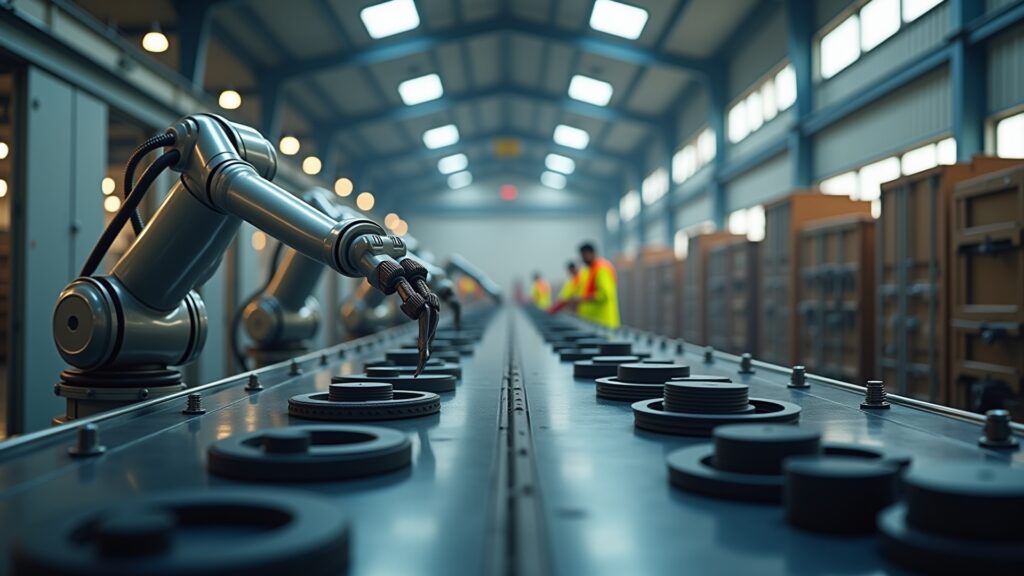
For you as a manufacturing executive or investor, these shifts necessitate a strategic recalibration. The softness in order books compels a rigorous review of your growth forecasts, focusing on sustainable productivity gains over mere volume increases. The integration of advanced manufacturing technologies—automation, robotics, and industrial AI—are not just trends; they are essential levers to amplify throughput and reduce incremental costs amid demand softness.
Alongside technology, strengthening your localization efforts and prioritizing value-added exports can shield your operations from the shocks of fluctuating external demand. This aligns with India’s policy push for self-reliance and export competitiveness under frameworks like the Production-Linked Incentives (PLI) scheme. Your ability to strategically position your factory within these initiatives can unlock growth and cost advantages.
Policy and Industry Response
India’s ongoing policy support—including infrastructure investment and PLI schemes—continues to provide a crucial backdrop for growth. However, the tempered PMI growth underscores the need for sustained momentum in areas such as factory modernization, workforce skill enhancement, and supply-chain integration. Your role as an industrial leader includes engaging proactively with policymakers and supply-chain partners to catalyze innovation and operational agility.
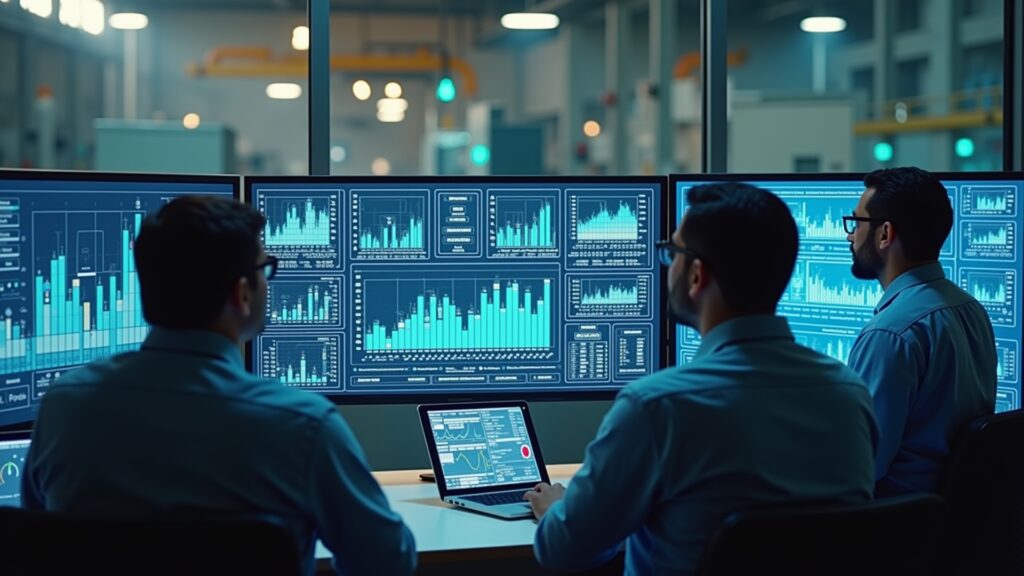
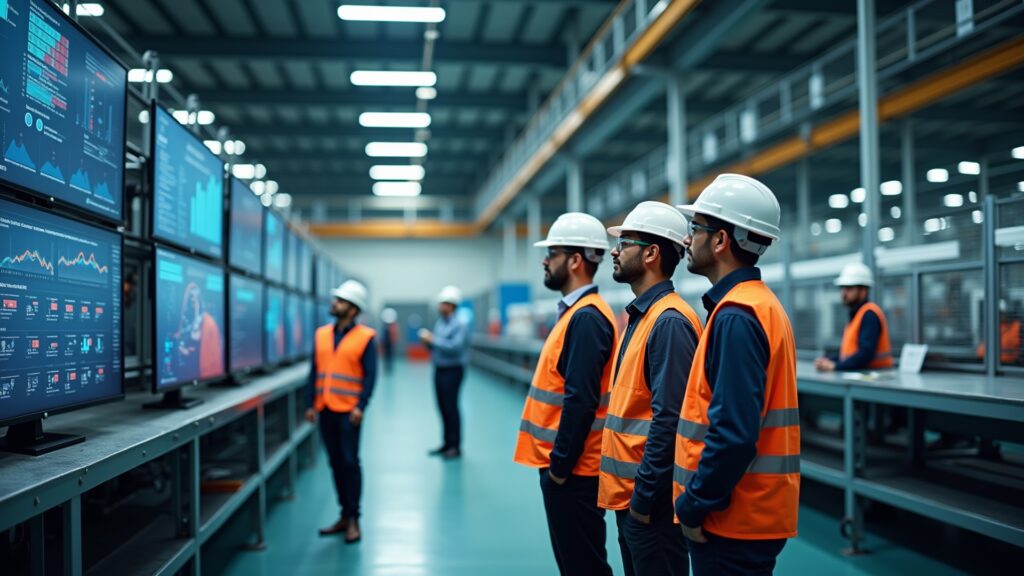
Digitization and predictive analytics emerge as vital tools to navigate demand cyclicality. By leveraging real-time data insights, you can make precision decisions—even in periods of uncertainty—optimizing inventory, minimizing waste, and enhancing responsiveness.
Strategic Analysis: Navigating Moderation for Long-Term Advantage
The message is clear: moderation in growth is an opportunity to sharpen your operational performance, not a signal to retreat. Smart factory initiatives—embracing automation, lean methodologies, and industrial AI—can boost your manufacturing scalability and responsiveness. These technologies offer you the ability to maintain cost discipline while improving quality and speed.
Moreover, sustainability and energy efficiency are no longer optional. Green industrial processes are increasingly tied to regulatory frameworks and customer preferences worldwide. Incorporating energy-efficient technologies not only curbs your operational expenses but also positions your brand as a forward-thinking, responsible player on the global stage.
“In manufacturing, scale matters — but resilience and precision are what create durable advantage.”
Practical Takeaways for Manufacturing Leaders
- Reassess Demand Sensitivity: Monitor your order books and production schedules closely to align resources with evolving market realities.
- Accelerate Technology Adoption: Prioritize automation, robotics, and industrial AI to boost throughput and operational efficiency.
- Strengthen Localization and Value Addition: Invest in supply chain partnerships that enhance local sourcing and export-readiness.
- Leverage Policy Incentives: Engage with government schemes like PLI and infrastructure upgrades to modernize your operations.
- Enhance Workforce Skills: Invest in training to deploy and operate advanced manufacturing technologies effectively.
- Embrace Sustainability: Implement energy-efficient processes to reduce costs and align with global environmental trends.
- Digitalize for Agility: Use predictive analytics and real-time data to improve decision-making under demand uncertainty.
“The real edge is not only in producing more, but in producing faster, smarter, and closer to where demand is shifting.”
Risks and Challenges Ahead
While the moderation in India manufacturing growth offers a moment for strategic reflection, it also introduces risks. Demand softness, if prolonged, can strain cash flows and profitability, requiring careful financial management. Supply chain disruptions remain a looming threat amid geopolitical tensions and global economic uncertainties. Additionally, workforce challenges—ranging from labor skill gaps to retention—need ongoing focus.
However, complacency is the greatest risk. Postponing investments in digital and automation technologies or underestimating the importance of supply chain resilience can leave your business vulnerable to future shocks.
What You Should Watch Next
- PMI and Demand Indicators: Stay updated on PMI trends and order book dynamics to anticipate market shifts.
- Policy Developments: Monitor government initiatives on incentives, export support, and infrastructure improvements.
- Technology Advances: Track innovations in smart factory technology, industrial robotics, and AI applications suitable for your scale and sector.
- Global Supply Chain Movements: Watch how global companies adjust sourcing strategies, particularly around China+1 diversification.
- Sustainability Regulations: Keep abreast of tightening environmental standards affecting manufacturing processes and supply chains.
“When automation, supply-chain discipline, and execution quality align, manufacturing growth becomes far more sustainable.”
Conclusion
Your manufacturing business operates within a landscape marked by moderation in India manufacturing growth in June—a landscape that demands both agility and strategic focus. This phase is not merely a lull but a crucial juncture to refine your technology adoption, supply chain resilience, and workforce capabilities while aligning closely with government policies and sustainability goals. By doing so, you secure a durable competitive advantage that balances growth ambition with disciplined execution—key to thriving in India’s intricate but promising industrial ecosystem.