As you steer your manufacturing enterprise through the evolving global landscape, India’s bold tech manufacturing ambitions present both a challenge and an opportunity. The critical factor shaping this journey is China’s entrenched grip on key supply chains, a dominance that directly affects how you plan production, secure components, and compete internationally. Understanding this dynamic is essential to positioning your factory or investment for long-term relevance and resilience.
Why This Matters to You
Your manufacturing business’ ability to scale and innovate hinges on stable access to critical tech components. China’s commanding role in global supply chains means you face pricing pressures, sourcing bottlenecks, and geopolitical risks that limit operational autonomy. Unless your strategy incorporates ways to navigate or offset this control, your growth, export potential, and responsiveness to market shifts could be compromised.
For investors and plant leaders, this means strategically aligning capital and resource allocation to build capacity where supply vulnerability is greatest. For policy makers and industrial strategists, the implications extend to crafting incentives and infrastructure projects that accelerate India’s emergence as a credible tech manufacturing hub.
Understanding the Supply Chain Challenge
China’s dominance is no accident. It has built a manufacturing ecosystem over decades that integrates raw materials procurement, component production, assembly, and logistics efficiently and at scale. This scale creates cost advantages and speed-to-market benefits difficult to match.
For you, entering or expanding within technology manufacturing sectors—whether electronics, semiconductors, or industrial machinery—means competing against supply chains optimized for maximum reliability and cost-efficiency. The impact is multi-layered: limited access to specialized inputs reduces your ability to innovate and delays your time-to-market, while reliance on external sources increases exposure to disruptions driven by geopolitical tensions or global events.
Strategic Impact on Manufacturing Leadership
To counter this, you must sharpen your focus on increasing localization and nurturing a resilient supply chain. This requires investment in local capacity building, developing domestic supplier ecosystems, and collaborating on advanced manufacturing technologies.
Government initiatives like the Production Linked Incentive (PLI) scheme are critical enablers, offering targeted support to manufacturers aiming to reduce import dependencies and enhance domestic production of electronics and tech components. Aligning your strategy with these policy frameworks can unlock capital and accelerate scale-up.
Deeper Insights: Automation, AI, and Smart Factory Integration
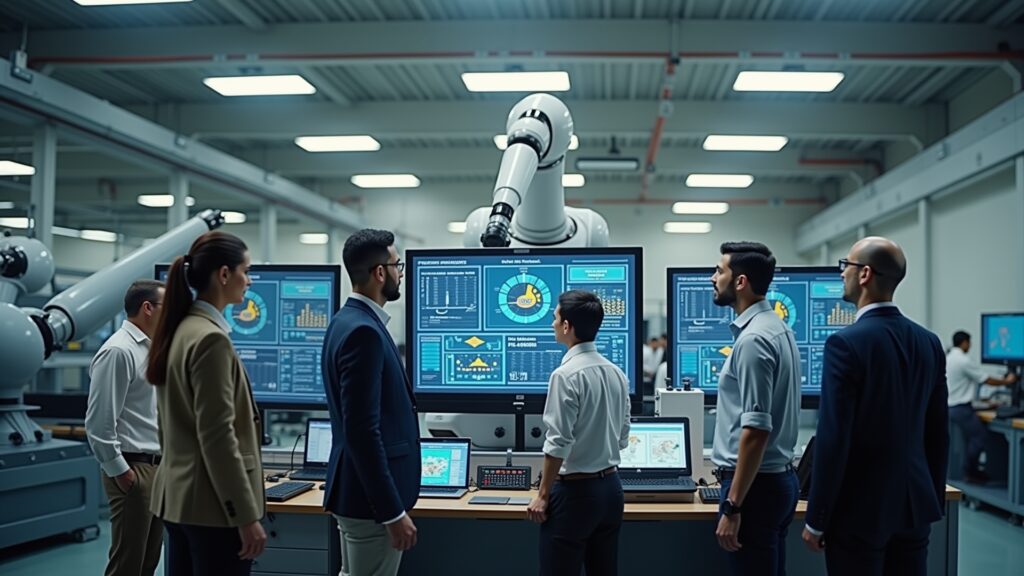
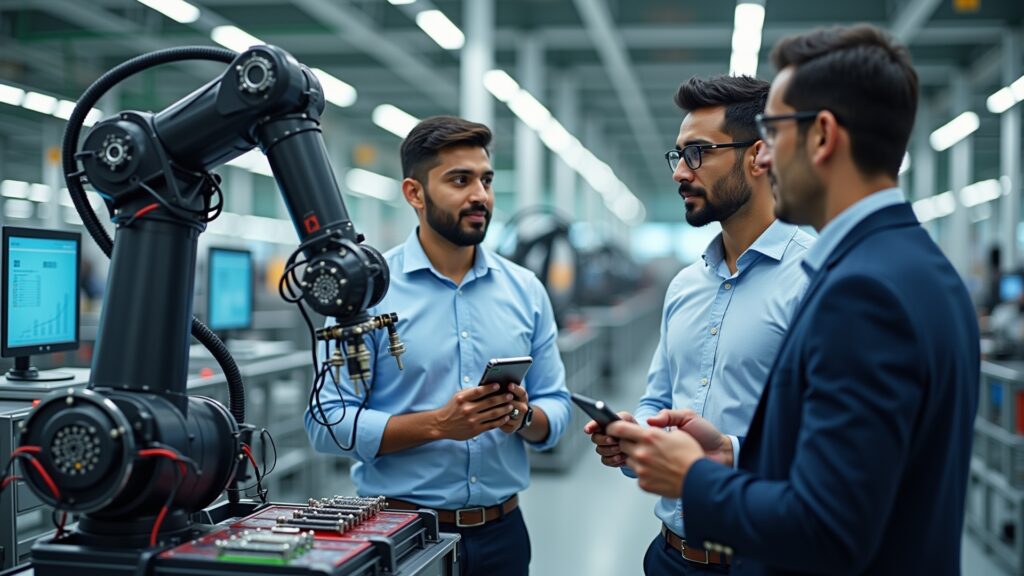
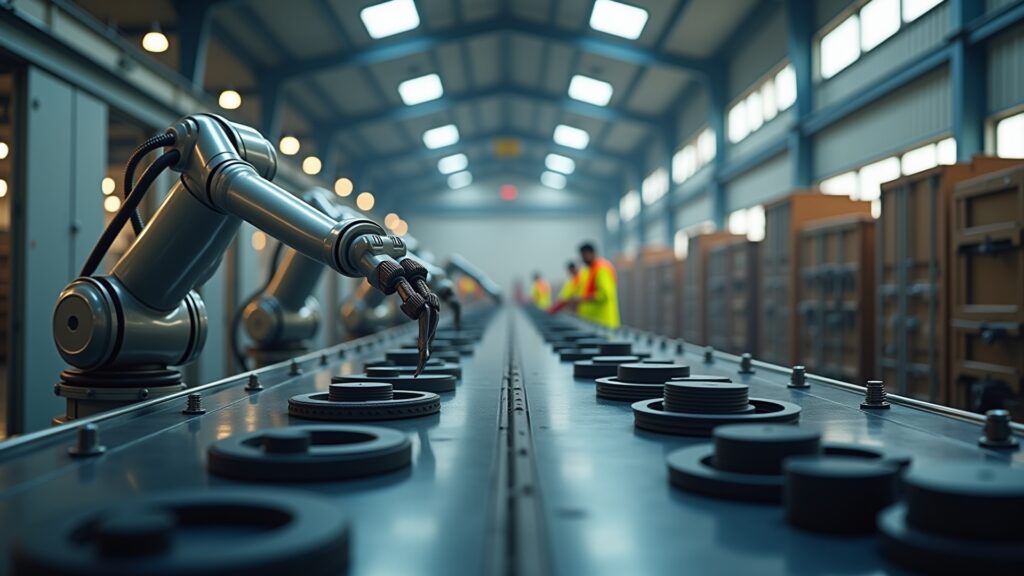
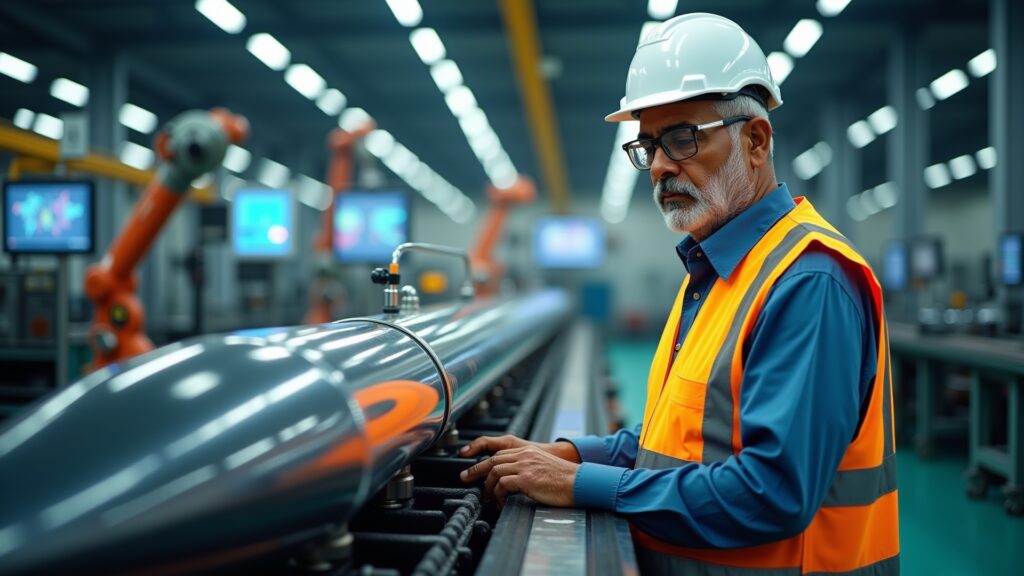
Scaling local manufacturing capability is not only about physical capacity but also about embedding advanced industrial technologies. Implementing automation, robotics, and industrial AI enables improved productivity, cost control, and quality precision—key factors when competing globally.
An agile, data-driven supply chain, combined with smart factory practices, gives you the adaptability to respond swiftly to external pressures. These technologies also pave the way for continuous innovation, improving operational efficiency and ensuring consistent product standards essential for export competitiveness.
“In manufacturing, scale matters — but resilience and precision are what create durable advantage.”
Practical Takeaways for Your Business
- Prioritize localization: Identify critical components where India’s supply gap exists and invest strategically in domestic manufacturing capabilities.
- Leverage government incentives: Engage actively with schemes like PLI to maximize financial and infrastructural support.
- Integrate advanced manufacturing technologies: Automate production lines and adopt industrial AI to raise productivity and reduce dependency risks.
- Diversify your supply base: Build regional partnerships and explore alternative sourcing beyond China.
- Enhance supply chain agility: Use data-driven insights to anticipate and respond to global supply chain shifts.
“The real edge is not only in producing more, but in producing faster, smarter, and closer to where demand is shifting.”
Navigating Risks and Industry Challenges
Despite the strategic momentum, significant challenges remain. Building a robust supply chain from the ground up demands substantial capital, technical expertise, and time. The competitive cost and maturity of Chinese supply chains continue to set a high bar.
Moreover, geopolitical unpredictability may fluctuate, making it imperative that your business adapts dynamically rather than relying on a single strategy. Collaboration across sectors, continuous policy advocacy, and sustained investment in workforce skills and industrial infrastructure are essential to navigating these headwinds.
What You Should Watch Next
Keep close tabs on the Indian government’s policy developments and incentive programs aimed at technology manufacturing. Monitor shifts in global supply chains, particularly how regional partnerships and “China+1” strategies evolve, as these will impact sourcing and risk mitigation.
Additionally, watch how emerging technologies in industrial AI and automation reshape operational models, enabling greater scalability and flexibility. For you, keeping pace with these trends will be integral to maintaining competitive edge and ensuring your manufacturing operations build not just capacity but resilience.
Conclusion: Securing India’s Place in Global Tech Manufacturing
Confronting China’s supply chain dominance is no small feat, but it is a challenge you must engage if your manufacturing business is to thrive in the global technology arena. Your path forward involves a cohesive approach combining investment in local capabilities, technology adoption, and policy alignment to ensure sustained growth, competitiveness, and export potential.
Remember, India’s evolving tech manufacturing landscape offers significant promise — but realizing it requires addressing supply chain dependencies head-on. As you lead the charge, prioritizing supply chain resilience, industrial innovation, and strategic partnerships will empower you to transform challenges into enduring advantages.
“When automation, supply-chain discipline, and execution quality align, manufacturing growth becomes far more sustainable.”