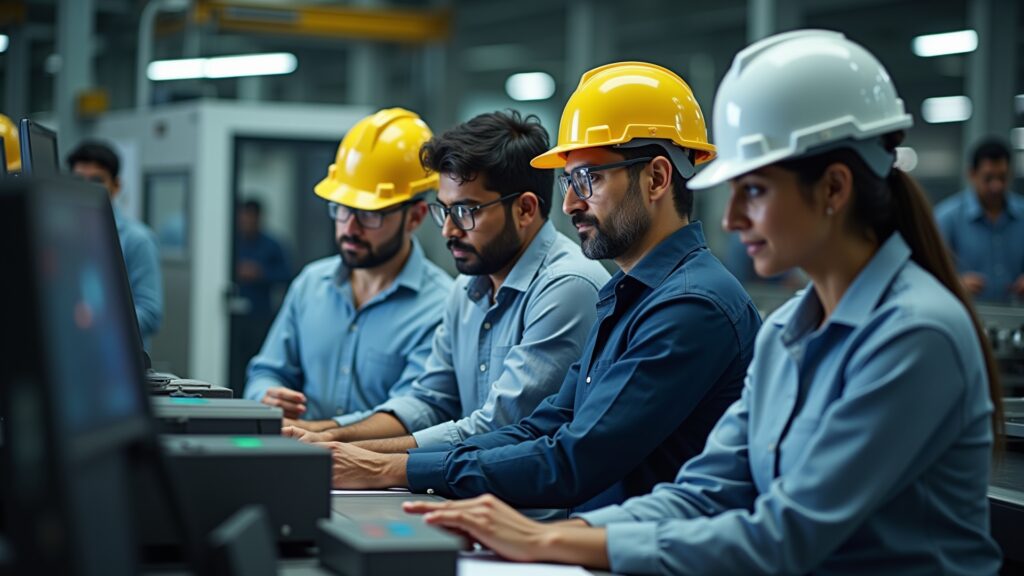
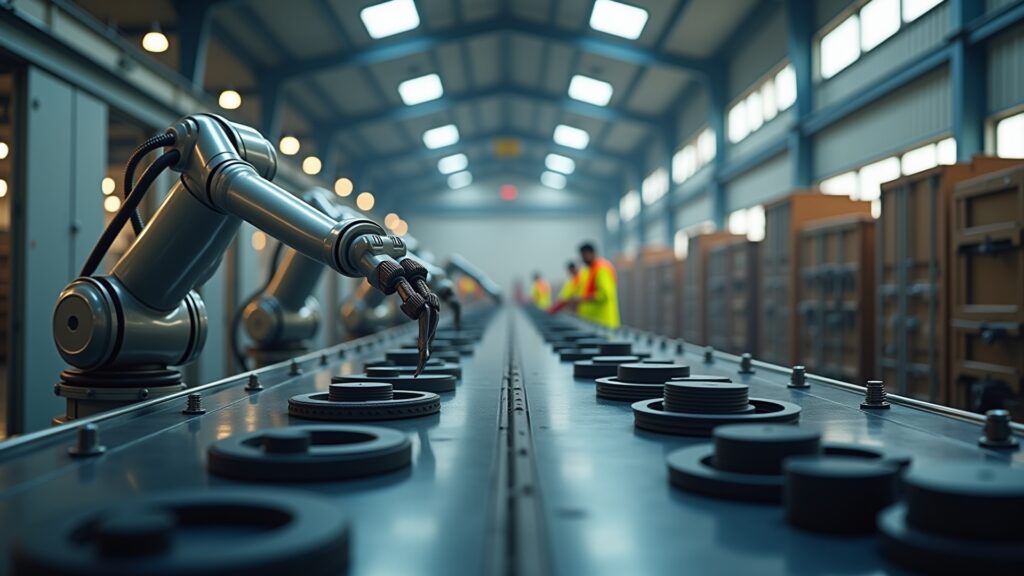
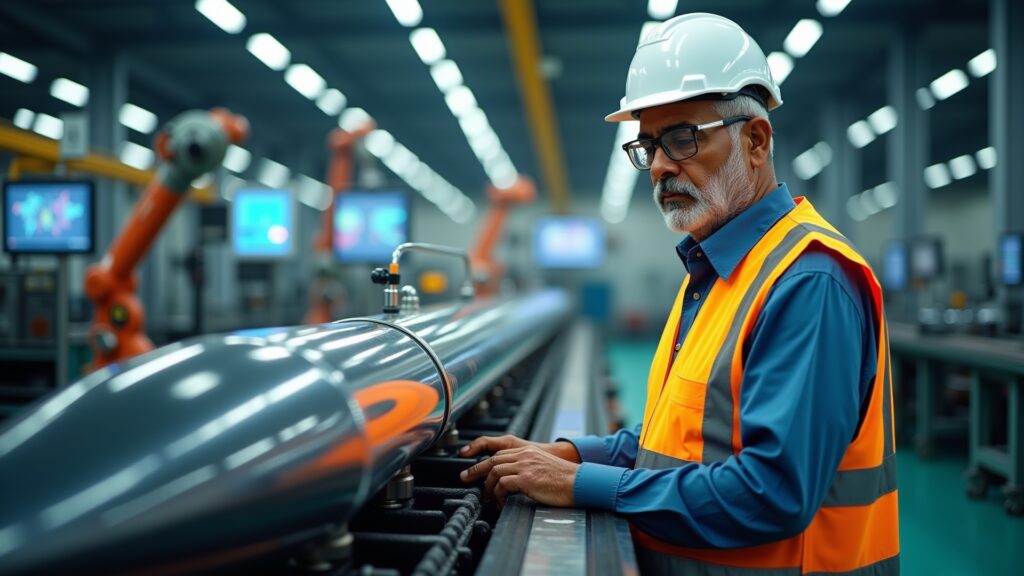
The semiconductor industry is no longer a peripheral sector; it’s the backbone of modern manufacturing and technological innovation. As a manufacturing leader, investor, or policymaker, the announcements around India’s semiconductor manufacturing push should command your immediate attention. This initiative is not just about expanding capacity; it represents a strategic pivot that could redefine your factory’s future, global supply chains, and India’s position in the global industrial hierarchy.
Why This Matters to You
Your business and operational strategy must integrate this shift toward domestic semiconductor capability. The global supply chain instability exposed during recent geopolitical tensions and pandemic disruptions has made it clear: relying on distant sources, particularly concentrated in China, poses substantial risks. India’s semiconductor ambitions provide you a potential alternative — one that promises resilience, localisation, and scale. For factory leaders, this means new opportunities in advanced manufacturing technologies. For investors, it highlights a market with long-term growth potential rooted in technology and manufacturing convergence. And for supply chain heads, this push signals impending changes in sourcing strategies and logistics frameworks, emphasizing agility and security.
The Semiconductor Surge: What Is Happening
India has initiated a decisive investment strategy targeting semiconductor production, underpinned by governmental support and policy incentives tailored to attract both domestic and international players. This includes setting up state-of-the-art fabs and associated manufacturing clusters capable of supporting highly complex industrial processes. The sector’s growth will extend beyond mere chip production, spurring demand in precision engineering, industrial automation, and supply chain sophistication.
Prime Minister Narendra Modi’s public emphasis signals a national-level priority to weave semiconductor production deeply into India’s manufacturing fabric. This strategy aligns with the global “China+1” model, where companies seek diversification beyond China to build resilient and balanced supply chains. India aims to position itself not only as an alternative but as a preferred destination for semiconductor manufacturing and allied industrial activities.
Key Industrial and Market Impacts
- Advanced Manufacturing Technologies: You can expect accelerated adoption of automation, robotics, and industrial AI as fabs demand precision, quality, and scalability.
- Workforce Transformation: Job creation will be multifaceted — spanning design, production, logistics, maintenance, and technical skill development.
- Supply Chain Resilience: Localised semiconductor production will reduce dependency on far-flung supply sources, lowering risk and enhancing control.
- Export Growth and Competitiveness: With product value addition rising, your export strategies could gain new momentum, backed by a globally competitive manufacturing ecosystem.
- Policy and Infrastructure Support: Government incentives and manufacturing-linked programs are designed to bolster capital investment and infrastructure readiness.
Strategic Insights: What This Means for Manufacturing Leaders
The semiconductor push is an industrial game-changer that demands you rethink capacity planning, technology deployment, and talent acquisition. Advanced fabs require precision engineering and uncompromising quality management, pushing you toward embracing smart factory technologies, industrial AI, and robotics integration.
Moreover, expect your supply chain operations to need repositioning. Material sourcing will become more strategic, with an emphasis on resilience and localisation. This trend supports a China+1 diversification strategy that can buffer your operations against global disruptions — a lesson underscored by recent supply chain shocks.
“In manufacturing, scale matters — but resilience and precision are what create durable advantage.”
You must also engage with the evolving policy landscape and incentive programs to maximize capital allocation efficiency. Aligning your investment decisions with national industrial priorities can accelerate your growth trajectory and global relevance.
Practical Takeaways for Your Manufacturing Strategy
- Monitor government announcements and industry developments closely to identify emerging investment and partnership opportunities.
- Invest in skill development programs aligned with semiconductor and precision manufacturing requirements to future-proof your workforce.
- Upgrade your production and quality systems to meet the high standards of semiconductor fabrication.
- Reassess your supply chain and logistics frameworks to leverage the local sourcing and minimize geopolitical risks.
- Explore automation and industrial AI tools to boost productivity, quality, and operational efficiency at scale.
Expert Perspective
“The real edge is not only in producing more, but in producing faster, smarter, and closer to where demand is shifting.”
“When automation, supply-chain discipline, and execution quality align, manufacturing growth becomes far more sustainable.”
Risks and Challenges Ahead
While the semiconductor initiative is promising, the journey is complex and capital intensive. Building fabs requires enormous investment and expertise, both technical and managerial. The ecosystem for semiconductor production demands high-caliber infrastructure, uninterrupted power supply, water resources, and a consistent talent pipeline—challenges that India must address at scale.
You should be vigilant about potential policy shifts, global technology competition, and evolving supply chain dynamics. The demand-supply balance in semiconductor markets can be volatile, requiring adaptable strategies that hedge risks and leverage emerging opportunities.
What to Watch Next
Stay alert to developments in semiconductor fabrication partnerships, announcements on industrial clusters, and policy incentive rollouts. Also watch for increased movement in skills training institutes and automation technology deployment in India’s manufacturing sector. These indicators will tell you how quickly the semiconductor wave is rippling through India’s industrial landscape.
Conclusion
India’s semiconductor manufacturing push signals a profound transformation that you cannot afford to ignore. This initiative brings the promise of technological advancement, job creation, and enhanced competitiveness in a global supply chain increasingly aware of resilience and diversification.
For your manufacturing business, this means adapting to higher precision production, embracing advanced automation, and aligning with evolving supply chain realities. As you navigate this new industrial chapter, leveraging policy support and investing in your workforce and technology will be key to securing a leadership position in the global manufacturing ecosystem.
India semiconductor manufacturing push is not just a policy—it’s a strategic lever for India’s emergence as a manufacturing powerhouse with a ripple effect across industrial growth, exports, and global competitiveness.