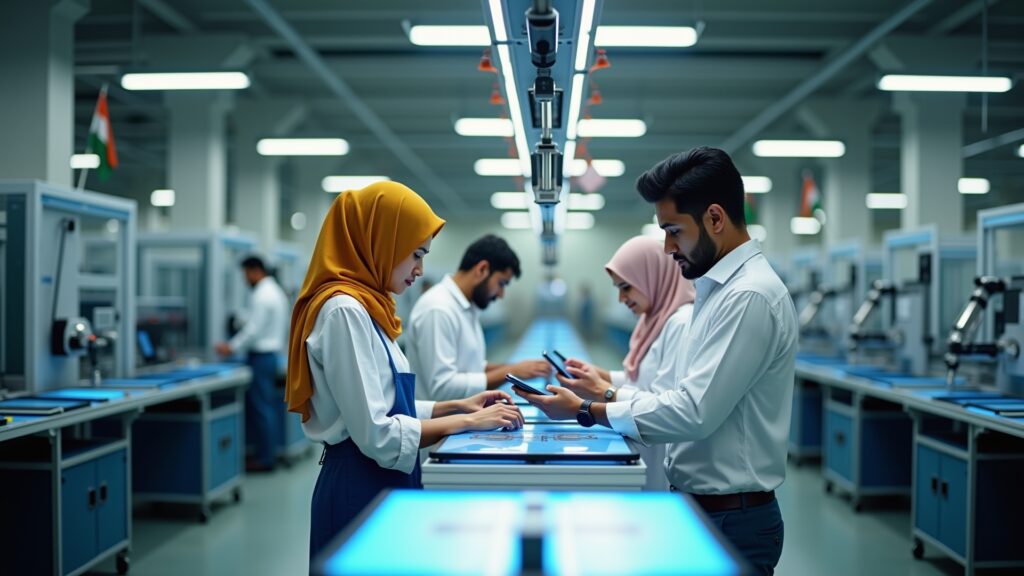
As a manufacturing leader or industrial strategist in India, you must pay close attention to the rising tide of homegrown smartphone manufacturing. It’s no longer marginal: one in four smartphones produced in India is now crafted by indigenous manufacturers, signaling a pivotal shift in your country’s industrial terrain. This trend doesn’t just affect production numbers; it reshapes your factory operations, supply chain dynamics, investment climate, and your competitive stance in global markets.
Why This Trend Matters to Your Manufacturing Enterprise
This surge in India’s homegrown smartphone manufacturing reflects broader opportunities and challenges that will directly influence your business strategy. You are navigating an environment where local production depth enhances export potential, reduces import dependency, and demands a sharper focus on productivity, quality, and technological sophistication. For your factory, your supply ecosystem, and your capital planning, this trend underscores an essential evolution toward making India a global manufacturing powerhouse.
What Is Driving the Growth of Indigenous Smartphone Production?
Several strategic forces underpin this evolution. First, government-led initiatives such as the Production-Linked Incentive (PLI) scheme encourage capacity expansion and technological upgrades among native manufacturers. These policies create a fertile ground for investments in automation, industrial AI, and advanced manufacturing techniques that you must integrate into your operations to stay competitive.
Second, evolving supply chains in India are growing more resilient and capable. By nurturing local supplier networks, your factories can achieve greater agility and reduce vulnerabilities stemming from global supply chain disruptions and geopolitical uncertainties. Third, a renewed focus on exports is compelling manufacturers to elevate quality standards and compliance frameworks to meet stringent international benchmarks, which in turn accelerates the sophistication of your production processes.
Strategic Implications for Your Manufacturing and Export Strategy
For you as a manufacturing leader, these trends translate directly into operational and strategic imperatives:
- Scale and Technology Integration: Expanding capacity is not merely about increasing volume; it is about embedding automation, AI, and Industry 4.0 practices into your lines to enable flexible, efficient, and high-quality output.
- Supply Chain Localization: Reinforce your supplier ecosystem by partnering with domestic component makers and logistics providers to build a robust, cost-competitive supply chain that supports timely exports.
- Global Quality Compliance: Invest in stringent quality management systems and workforce skill development to consistently meet international certifications and standards required by export markets.
- Policy Leverage: Stay actively engaged with government programs and incentives, positioning your business to benefit from infrastructural upgrades, financial support, and regulatory facilitation.
Insights to Guide Your Strategic Decisions
"In manufacturing, scale matters — but resilience and precision are what create durable advantage."
"The real edge is not only in producing more, but in producing faster, smarter, and closer to where demand is shifting."
Recognize that your competitive advantage emerges from a balanced combination of volume, quality, technology, and supply chain mastery. This integrative approach ensures your business not only benefits from current policy incentives but also builds long-term industrial competitiveness and export excellence.
Practical Takeaways for Manufacturing Leaders and Investors
- Prioritize Capital Expenditure: Invest strategically to scale automated and AI-enabled production lines that raise productivity and quality standards.
- Build Local Supplier Networks: Develop resilient, cost-efficient local sourcing to reduce exposure to global shocks and enhance export readiness.
- Enhance Workforce Capabilities: Focus on training and upskilling your teams to meet higher technical and quality demands of global markets.
- Engage with Policy Frameworks: Monitor evolving incentives like PLI closely and participate proactively to extract maximum benefit.
For investors, this landscape suggests compelling opportunities in industrial automation, smart factory technologies, and companies well-positioned to capitalize on export demand.
Risks and Challenges Ahead
Though the momentum is promising, you must also address certain risks. Supply chain localization is complex and developing fully trusted domestic supplier bases takes time and capital. There are also challenges in consistently meeting international quality benchmarks, requiring sustained management focus and operational discipline.
Policy environments can shift, and global geopolitical tensions may impact export markets unpredictably. Staying agile in strategy and execution will be essential to navigate these uncertainties.
Key Indicators to Watch Next
- Progress of government incentive programs and extension or enhancement of policies like PLI.
- Advancements in factory automation and AI adoption rates within indigenous smartphone manufacturers.
- Expansion of export volumes and diversification into new international markets.
- Development and maturation of local supply chains, including component and materials ecosystems.
Conclusion: Positioning Your Manufacturing Enterprise for Export-Led Growth
Your role in India’s burgeoning homegrown smartphone manufacturing industry is critical to capitalizing on export-led growth. By leveraging policy incentives, investing in advanced manufacturing and automation technologies, and reinforcing local supply chains with a keen eye on quality and compliance, you can secure your place in a rapidly evolving industrial landscape.
This isn’t just a story about smartphones; it’s a blueprint for industrial renewal and competitive positioning for India’s entire manufacturing sector. In embracing this evolution, you set a precedent for other industries aiming to thrive through localisation and global export competitiveness.
"When automation, supply-chain discipline, and execution quality align, manufacturing growth becomes far more sustainable."
Stay strategic, stay informed, and invest wisely to harness the full potential of homegrown smartphone manufacturing as a catalyst for enduring industrial growth.