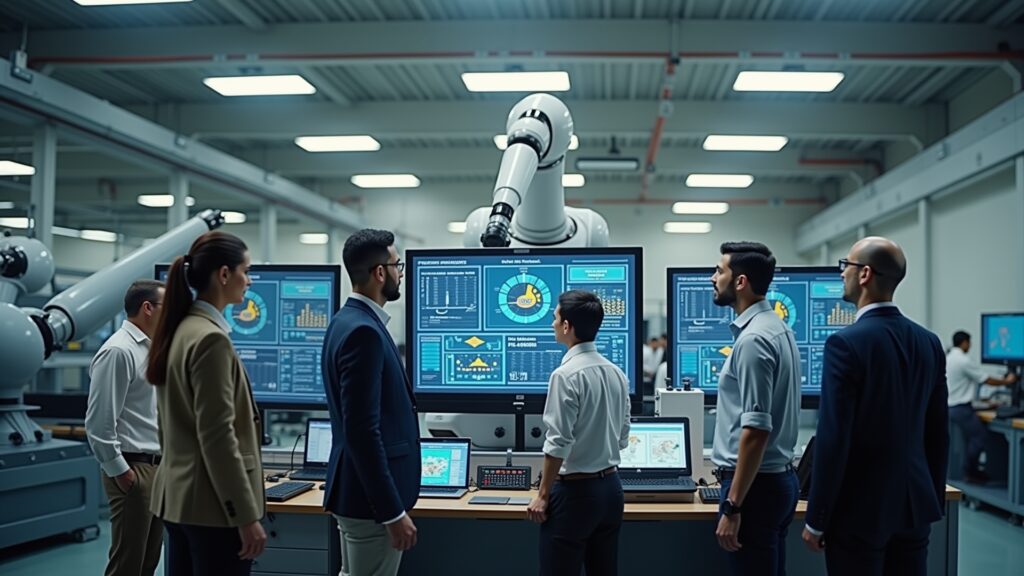
As a manufacturing leader or investor in India, you are confronting a pivotal challenge that reshapes the very foundation of your competitiveness: the workforce skills gap. This gap is no longer a question of merely filling jobs; it is about securing and nurturing the precise skill sets that modern manufacturing demands. How you respond to this shift will directly influence your factory’s productivity, capacity to scale, and ability to compete globally.
Why This Skills Shift Matters to You
Your manufacturing operations, supply chain strategies, and long-term investment outlook depend on a workforce that can operate at the intersection of advanced technology and industrial scale. With India positioning itself as a prime alternative to traditional global hubs, it’s critical to grasp why this evolving skills gap is your most pressing strategic issue.
Inadequate access to skilled talent skilled in automation, robotics, industrial AI, predictive maintenance, and digital factory controls could constrain your ability to:
- Implement smart factory initiatives effectively
- Optimize production costs while maintaining quality standards
- Expand capacity confidently with scalable operations
- Compete in export markets governed by rigorous quality benchmarks
- Navigate supply chain disruptions with agility
What Is Happening in India’s Manufacturing Workforce Landscape
India’s manufacturing sector is experiencing a transformation beyond traditional labour shortages. The core concern now lies in a deficit of workers equipped with skills aligned to Industry 4.0 technologies and methodologies. As localisation policies and supply chain realignment (in reaction to global uncertainties and China+1 strategies) accelerate, your access to relevant, competent talent becomes a strategic bottleneck.
The factories of tomorrow demand expertise not just in manual or semi-skilled roles but in areas such as:
- Industrial automation and robotics programming
- Quality assurance systems integrating AI and machine vision
- Data analytics for predictive maintenance and operational efficiency
- Precision engineering for high-value components
Key Impacts on Your Manufacturing Business
This evolving reality carries implications across multiple dimensions of your business:
- Operational Efficiency: Without the right skills, automation investments risk underutilisation, delaying returns and eroding cost advantages.
- Industrial Resilience: Dependence on a limited talent pool impairs responsiveness to supply chain shocks and market shifts.
- Export Competitiveness: Meeting stringent international quality standards requires a workforce proficient in advanced quality and process controls.
- Productivity and Innovation: Skilled workers fuel continuous improvement, driving innovation in process engineering and product development.
Strategic Insight: Aligning Workforce Development with Industrial Growth
Capital investments in advanced machinery or factory expansions must be accompanied by deliberate strategies that address the skills gap. Your talent acquisition cannot be about quantity but about cultivating capabilities that future-proof your operations.
Key approaches include:
- Partnering with educational and technical institutions to co-create industry-relevant curricula
- Implementing continuous re-skilling and upskilling programs tailored to emerging technologies
- Leveraging government skill development schemes by ensuring alignment with your specific industrial needs
- Embedding workforce development as a core component of your factory modernization plans
“In manufacturing, scale matters — but resilience and precision are what create durable advantage.”
Expanding your factory’s capacity without a capable workforce is a false economy. You must embed workforce capability development within your broader technology adoption roadmap.
Practical Takeaways for Manufacturing Leaders and Investors
- Understand: Recognise the critical shift from job availability to skill availability as the defining competitive factor.
- Monitor: Keep abreast of evolving skill requirements driven by automation, AI, and global quality standards.
- Act: Prioritise strategic partnerships with training institutions and invest in re-skilling your existing workforce.
- Invest: Align capital expenditure on automation and smart factories with concurrent human capital development.
- Advocate: Engage with policymakers to push for better alignment of government skill initiatives with industry realities.
“The real edge is not only in producing more, but in producing faster, smarter, and closer to where demand is shifting.”
Risks and Challenges Ahead
The road ahead will not be without hurdles. Implementation gaps in skill development programs, mismatches in curriculum design, and inertia in traditional hiring practices could slow progress. Your ability to proactively manage change and innovate in workforce strategy will be critical.
Moreover, rapid technological adoption brings its own risks—without the right skills, operational complexities and maintenance challenges could escalate, reducing your ROI and competitiveness.
What You Should Watch Next
Stay alert to emerging collaborative frameworks between industry and educational bodies that signal improved skill ecosystem development. Also, track government policy shifts that provide incentives or programs focused on advanced manufacturing skills.
Technology adoption trends in AI, robotics, and digital supply chain integration will continuously reshape your workforce needs—remaining agile in your talent strategy will be essential.
Conclusion: Turning the Skills Gap Into Your Competitive Advantage
The India workforce skills gap in manufacturing is not merely a challenge to overcome—it is a strategic inflection point. How you address it will determine your ability to scale efficiently, enhance productivity, and compete on a global stage.
By shifting your focus from job creation to strategic skill development, you harness your workforce as a key driver of industrial innovation and export readiness. Align your investment, partnerships, and policies to cultivate this vital competitive edge. In doing so, you will position your manufacturing operation not just to survive but to thrive in the dynamic global economy.
Focus your strategy today on closing the skills gap to unlock the full potential of India’s manufacturing ascendancy.
“When automation, supply-chain discipline, and execution quality align, manufacturing growth becomes far more sustainable.”