As a manufacturing leader, you recognize that global trade dynamics profoundly influence your operational strategies, investment decisions, and competitive positioning. India’s current stance—a cautious, measured engagement with international trade—may appear conservative compared to aggressive liberalization models. Yet this is a deliberate strategic pivot designed to reshape the manufacturing landscape by balancing growth aspirations with resilience and control. Understanding this recalibration is critical for you to navigate evolving supply chains, capitalize on localisation opportunities, and position your factory or industrial enterprise for sustainable long-term success.
Why This Matters to You
Your factory’s future depends on how well you adapt to emerging trade paradigms that redefine sourcing, production, and market access. India’s cautious trade approach is not a retreat but a sophisticated strategy that impacts everything—from your capital allocation and technology adoption to workforce skill development and export ambitions. In a world increasingly marked by geopolitical uncertainty and supply-chain volatility, aligning with this paradigm can help you build the operational resilience and competitive edge needed to scale effectively within India’s burgeoning manufacturing ecosystem.
What Is Happening: India’s Evolving Trade Posture
India is embracing a calibrated trade policy that selectively opens doors while protecting critical sectors. This approach diverges from blanket liberalization by instituting safeguards that nurture nascent industries and encourage domestic value addition. The global shift toward the “China+1” sourcing strategy amplifies India’s appeal, but its leadership is keen to avoid rapid exposure to global shocks by emphasizing trusted partnerships and diversified supply chains.
Far from isolationist, this trade posture supports robust manufacturing growth through targeted policies such as Production Linked Incentive (PLI) schemes, infrastructure modernization, and export facilitation frameworks. India aims to evolve as a manufacturing powerhouse with supply-chain security and technology-driven scale rather than dependence on uncontrolled trade flows.
Key Impacts on Manufacturing, Supply Chains, and Policy
For you as a manufacturing executive, several critical shifts are underway:
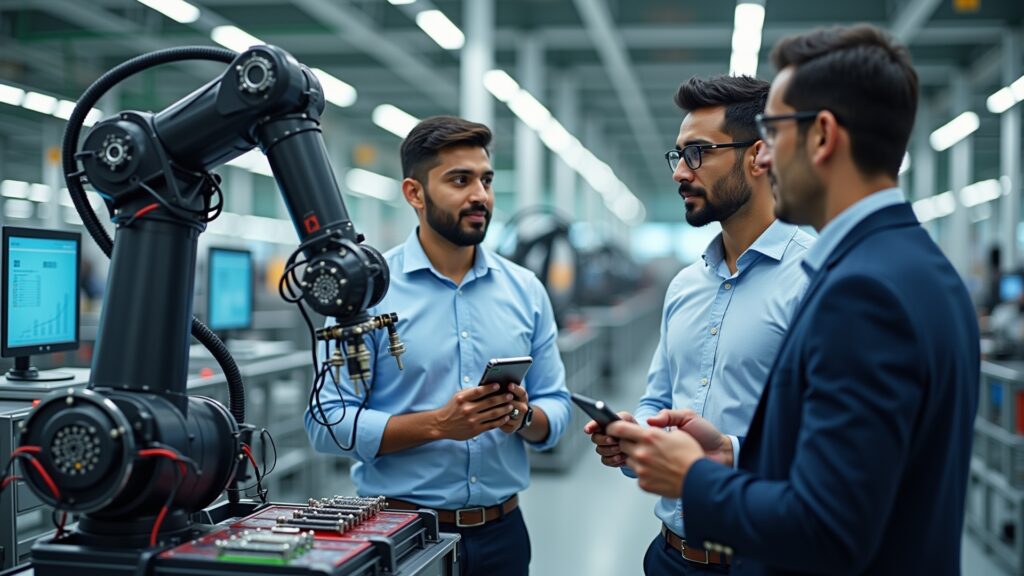
- Industrial Modernization: Automation, industrial AI, and energy-efficient processes are becoming not just competitive advantages but requisites in India’s industrial policy landscape.
- Supply Chain Duality: You must strategically balance imports with localisation to mitigate risks, enhance quality control, and reduce costs over time.
- Policy Engagement: Active participation in incentive schemes like PLI and awareness of evolving trade regulations will influence your investment and expansion choices.
- Export Readiness: Building internationally compliant quality standards helps position Indian manufacturing higher on the global value chain.
“In manufacturing, scale matters — but resilience and precision are what create durable advantage.”
Strategic Analysis: The Intersection of Innovation and Cautious Trade
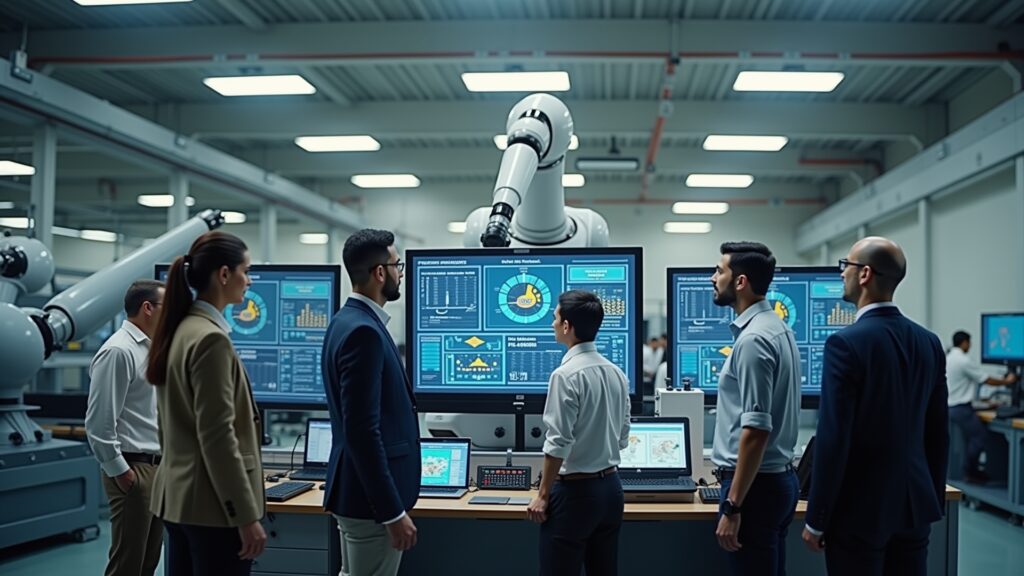
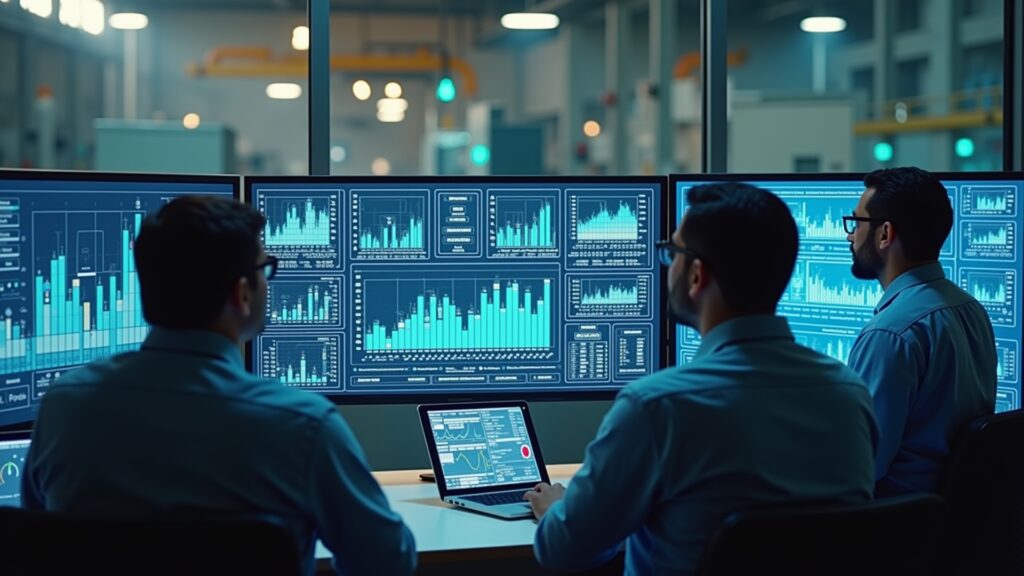
Your strategic challenge lies in harmonizing technology adoption with policy shifts and supply-chain redesign. India’s trade caution underscores the necessity of building smart factories equipped with predictive maintenance and flexible automation. The strategic embrace of industrial AI and robotics accelerates productivity and fosters operational excellence while maintaining supply continuity.
Moreover, the emphasis on domestic value addition aligns with global shifts demanding greener, more transparent manufacturing. Investments in energy-efficient equipment and cleaner processes not only meet regulatory expectations but enhance cost competitiveness and sustainability — key differentiators in increasingly conscious global markets.
“The real edge is not only in producing more, but in producing faster, smarter, and closer to where demand is shifting.”
Practical Takeaways: What You Should Do Now
- Evaluate your supply chain: Identify components or raw materials that can be locally sourced or substituted to reduce import dependency.
- Invest in automation: Prioritize technology that enhances flexibility, productivity, and predictive maintenance capabilities.
- Engage with policy incentives: Get informed on PLI schemes and other government programs that support capacity expansion and exports.
- Focus on quality standards: Align your production processes with international benchmarks to strengthen export competitiveness.
- Build resilience: Design operations that can withstand geopolitical or trade shocks through diversified supplier relationships and flexible manufacturing systems.
Industry Insight
“When automation, supply-chain discipline, and execution quality align, manufacturing growth becomes far more sustainable.”
Risks and Challenges Ahead
Adopting a cautious trade posture also brings complexities. Slower liberalization might limit rapid access to certain markets or technologies. You may face temporary cost pressures as localisation and compliance with stringent policy requirements ramp up. A strategic patience is needed, alongside proactive innovation and engagement actions, to convert these challenges into growth engines rather than setbacks.
What to Watch Next
Keep an eye on India’s evolving industrial policies, especially adjustments in PLI incentives and import-export regulations. Monitor developments in trade partnerships and regional trade agreements that India pursues, as these will redefine market opportunities. Watch for technological advancements and funding trends in industrial AI, automation, and energy efficiency solutions helping manufacturers thrive under this cautious trade regime.
Conclusion: Seizing Opportunity in India’s Cautious Trade Era
India’s cautious trade manufacturing stance is a nuanced, forward-looking strategy that holds significant promise for you as a manufacturing leader. It invites you to build scale through innovation-led, resilient operations that are aligned with national policy and global market realities. Far from a constraint, this measured approach offers a blueprint for sustainable competitive positioning in an increasingly complex industrial world.
By leveraging smart technologies, capitalizing on policy incentives, and embracing localisation without losing sight of exports, you can position your manufacturing enterprise for long-term success in India’s evolving global role.