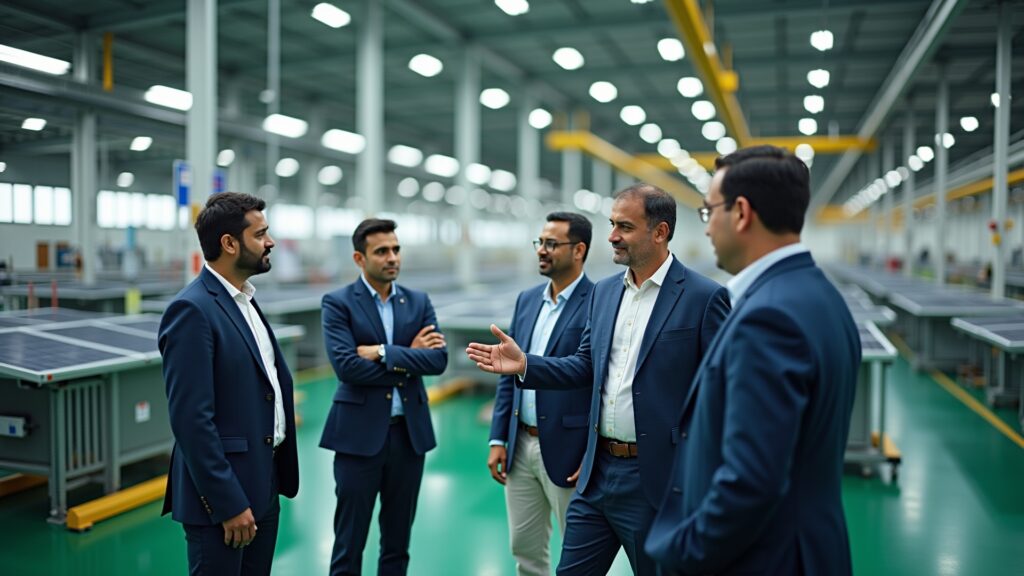
The manufacturing landscape in India is at a critical crossroads. In March 2026, the Manufacturing Purchasing Managers’ Index (PMI) dropped sharply to 53.9, nearing a four-year low — a signal you cannot afford to overlook. This decline directly reflects the ripple effects of the escalating geopolitical tensions in West Asia, a region pivotal to your supply chains, energy costs, and export routes. For you leading a manufacturing business, managing factory operations, or strategizing for growth, these trends highlight a complex operational environment that demands your immediate strategic attention.
Why This Matters to You
The current downturn in India’s manufacturing PMI isn’t simply a statistical anomaly; it reverberates through your factory floors, procurement desks, export plans, and investment outlook. As India positions itself as a global manufacturing powerhouse under initiatives like Make in India, a setback at this scale signals risks to your production pace, cost structure, and global competitiveness. Understanding these shifts is a business imperative — your ability to anticipate and respond can safeguard operational resilience, sustain growth momentum, and unlock new opportunities amid mounting external pressures.
The Core Dynamics Behind the PMI Decline
The West Asia crisis has intensified volatility across several fronts vital to manufacturing. It has disrupted key trade routes and logistics channels, escalated energy and raw material prices, and clouded market demand outlooks. These factors collectively slow output growth, dampen new orders, and raise uncertainty for factories spanning from large industrial hubs to emerging manufacturing clusters.
For those navigating Make in India objectives and the complex global supply chain realignments post-pandemic, this situation underscores a fraught operational terrain. Your supply chains now face unprecedented stress points, and scaling up production hinges on mitigating these geopolitical shocks while managing cost and efficiency challenges.
Key Business and Manufacturing Impacts
- Supply Chain Vulnerabilities: Reliance on inputs and logistics through conflict-affected West Asia exposes your operations to elevated risks of delay, scarcity, and inflated costs.
- Energy Cost Pressures: Energy remains a cornerstone of manufacturing economics. Heightened energy prices from the crisis strain your cost structures and could erode price competitiveness in export markets.
- Export Disruptions: With global uncertainty and demand fluctuations, increasing your international footprint becomes more challenging, risking delayed deliveries and constrained volumes.
- Production Efficiency and Labour Dynamics: Operational bottlenecks and uncertainty may slow factory throughput, affecting the efficiency gains you’ve invested in, while labour availability and costs can become less predictable.
Strategic Analysis: What You Should Prioritize Now
In this climate, you must sharpen your strategic reflexes. Diversification beyond conflict-influenced suppliers is no longer optional. Accelerating localisation within your supply chains will reduce your exposure to geopolitical shocks and foster greater control. This aligns with wider national policy thrusts on self-reliance and trusted supplier networks.
The adoption of automation, robotics, and industrial AI will prove invaluable to offset labour bottlenecks and streamline production agility. Smart factory technologies can also strengthen demand forecasting and inventory management, giving you the ability to pivot faster amid demand uncertainties.
Energy efficiency programs become strategic levers — reducing consumption and adopting cleaner alternatives can protect your margins and enhance sustainability credentials simultaneously.
Practical Takeaways for Manufacturing Leaders
- Conduct a comprehensive review of your supply sources, emphasizing localisation to reduce dependency on volatile regions.
- Prioritize investments in automation and smart factory systems to enhance agility and operational resilience.
- Build energy efficiency and sustainability into your core operating model to buffer cost volatility.
- Strengthen contingency planning frameworks for supply chain disruptions and market volatility.
- Engage actively with policy developments and harness incentives like Production Linked Incentives (PLI) to support capacity expansion and technology adoption.
“In manufacturing, scale matters — but resilience and precision are what create durable advantage.”
“The real edge is not only in producing more, but in producing faster, smarter, and closer to where demand is shifting.”
Policy and Leadership Perspectives
The government’s role in stabilizing this environment is critical. Policy incentives such as PLI schemes, infrastructure upgrades, and streamlined regulatory frameworks must continue evolving to improve industrial resilience. Your leadership team should seize opportunities to align investments with these policy levers, ensuring integrated growth and competitive positioning.
Workforce upskilling to blend human talent with emerging technologies is equally crucial. Leaders must foster a culture of adaptability, digital adoption, and collaboration within their factories and supply chains to embed long-term sustainability.
Risks and Emerging Challenges
While the focus remains on adaptation, be mindful of emerging risks. Prolonged geopolitical instability could prolong supply chain disruptions and escalate input costs further. Overreliance on automation without complementary workforce strategies may lead to operational silos. Delays in policy execution or infrastructure bottlenecks could impair scale-up plans.
Mitigating these challenges demands constant vigilance, proactive scenario planning, and agile operational execution.
What You Should Watch Next
- Monitor developments in West Asia closely to anticipate trade and energy market shifts affecting your cost base.
- Track policy announcements on manufacturing incentives, infrastructure rollouts, and supply chain localization initiatives.
- Stay informed on emerging technologies in industrial AI and automation that can provide competitive differentiation.
- Engage with industry forums and supply chain consortia to share insights and strategies on mitigating crisis impacts.
Conclusion: Harnessing Strategic Agility to Sustain Growth
The West Asia crisis and the accompanying sharp decline in India’s manufacturing PMI deliver a clear strategic signal. For you, the path forward demands every bit of your operational acuity and leadership foresight. Prioritizing supply chain diversification, boosting automation and energy efficiency, and leveraging policy incentives are no longer discretionary — they are essential to maintaining your manufacturing footprint and export competitiveness in a volatile global landscape.
Remember, “When automation, supply-chain discipline, and execution quality align, manufacturing growth becomes far more sustainable.” The moment to act decisively is now, so you can position your manufacturing business not only to weather current geopolitical storms but to lead in India’s long-term industrial ascent.