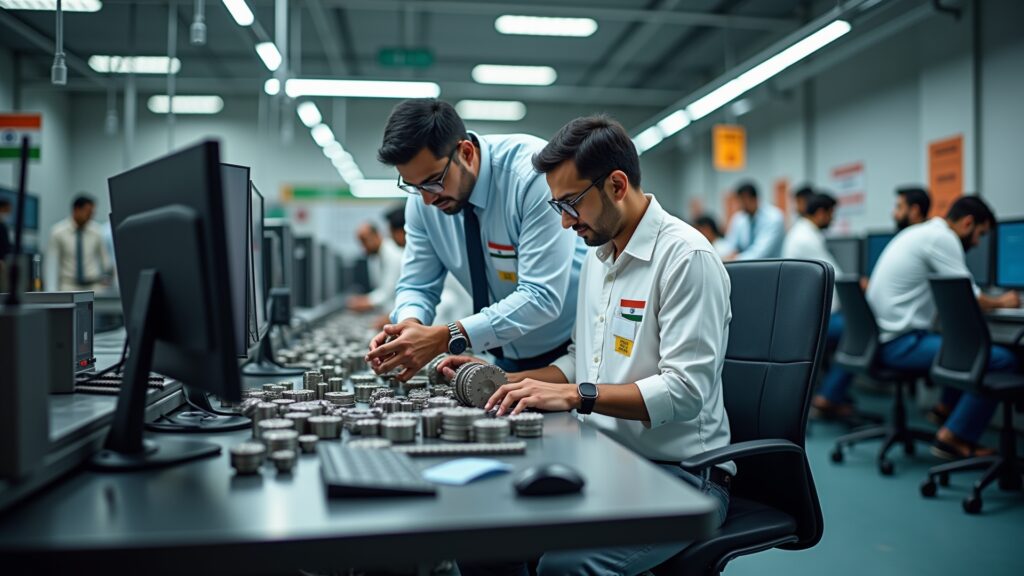
As a manufacturing leader or business owner deeply invested in India’s industrial trajectory, you need to understand the nuanced ways geopolitical tensions—specifically the US-Iran conflict—are beginning to influence your manufacturing ecosystem. While the immediate disruptions to India’s private sector growth and factory activity might appear marginal, they signal a critical inflection point for your supply chains, operational planning, and long-term competitiveness.
Why This Matters to You
Your manufacturing business doesn’t operate in isolation. It is entwined with global geopolitics, raw material sourcing, energy markets, and export dynamics that can swiftly shift with international conflicts. The US-Iran conflict impacts energy prices, supply stability, and market confidence—all of which directly influence your production costs, timelines, and growth outlook. Recognizing these emerging risks enables you to fortify your operations and safeguard your investment in India’s industrial rise.
Understanding What Is Happening
Recent tensions between the US and Iran have started to create ripple effects within India’s private sector, noticeably slowing expansion in manufacturing activity. India’s manufacturing momentum, driven by localisation initiatives, favourable policies like production-linked incentives (PLI), and a push towards export diversification, now faces unresolved vulnerabilities. With supply chains partially reliant on Middle Eastern energy and raw materials, geopolitical disruptions translate into fluctuating input costs and cautious market sentiment.
Key Business and Manufacturing Impacts
- Supply Chain Vulnerability: Your sourcing strategies reliant on Middle Eastern suppliers are exposed to volatility, demanding immediate diversification.
- Energy and Raw Material Costs: Instability in oil and metal supplies can escalate operational expenses, squeezing margins.
- Production Planning Challenges: Uncertainties translate to cautious capacity expansion and heightened inventory risks.
- Export Competitiveness: Global buyers are increasingly seeking resilient supply chains, shining a light on India’s reliability and your factory’s readiness.
Strategic Analysis: Why Resilience and Agility Become Imperative
In the context of these developments, strengthening operational agility is no longer optional. To maintain your competitive edge, consider the following strategic imperatives:
- Diversify Procurement: Look beyond traditional suppliers and incorporate multiple sourcing options, including domestic and alternative international partners.
- Accelerate Automation and Digitalisation: Employ smart factory technologies and industrial AI to enhance flexibility and reduce reliance on disrupted human-intensive processes.
- Embed Sustainability: Energy efficiency and cleaner production methods not only mitigate costs amid price shocks but also align with emerging regulatory and market expectations.
- Optimize Capacity Planning: Build adaptive manufacturing systems capable of scaling operations up or down in response to external shocks.
“In manufacturing, scale matters — but resilience and precision are what create durable advantage.”
Practical Takeaways for Manufacturing Leaders
- Conduct Comprehensive Risk Audits: Assess vulnerabilities across your supply chain, energy sourcing, and production processes.
- Invest in Smart Factory Initiatives: Digitally transform your operations to improve data-driven decision-making and responsiveness.
- Collaborate with Policymakers: Engage in dialogue to influence and benefit from supportive industrial incentives and infrastructure development.
- Strengthen Export Positioning: Highlight India’s growing reliability as an alternative sourcing hub to global buyers.
- Monitor Geopolitical Developments: Stay informed about regional conflicts and adjust your strategies proactively rather than reactively.
“The real edge is not only in producing more, but in producing faster, smarter, and closer to where demand is shifting.”
Risks and Cautionary Notes
While the US-Iran conflict currently triggers subtle slowdowns, sustained or escalated tensions could lead to more serious disruptions in raw materials, energy supplies, and export markets. Overreliance on any single region or supplier increases exposure. Moreover, rapid reactions without strategic foresight may lead to inefficient capital allocation or missed opportunities in emerging supply chains.
What You Should Watch Next
Stay vigilant on several fronts that will shape the manufacturing landscape amid these geopolitical challenges:
- Energy Price Trends: Volatility in crude oil and related energy products.
- Government Policy Responses: Adjustments to PLI schemes, trade facilitation, and import-export regulations.
- Supply Chain Diversification Efforts: New partnerships and regional manufacturing hubs emerging as alternatives.
- Technology and Automation Adoption: Uptake rates of AI, robotics, and smart factory systems in your sector.
“When automation, supply-chain discipline, and execution quality align, manufacturing growth becomes far more sustainable.”
Conclusion: Navigating the US-Iran Conflict Impact on India’s Manufacturing
The unfolding US-Iran conflict impact on India’s manufacturing underscores the indispensability of resilience and strategic agility in your operations. Though the slowdown in private sector growth is still at an early stage, its implications for supply chains, cost structures, and export competitiveness are profound. By recalibrating your sourcing strategies, embracing automation and energy efficiency, and strengthening your manufacturing ecosystem’s adaptability, you position your business to not only weather current uncertainties but to thrive amid future geopolitical shifts.
In this complex global environment, your leadership in industrial innovation and operational excellence will be the key to sustaining India’s manufacturing momentum and securing your place in the global market.