As someone leading or invested in India’s manufacturing industry, you’re no stranger to the complex pressures shaping your factory floors and supply chains. Labour shortages combined with rising input costs are not just operational inconveniences — they present strategic hurdles that could redefine your competitive landscape in both domestic and global markets. Understanding the full scope of these challenges is imperative to safeguarding your manufacturing growth and export ambitions.
Why This Matters to You
If you’re steering a manufacturing business or managing operations, these twin forces directly affect your cost structures, production capabilities, and ability to fulfil export commitments reliably. Labour scarcity can disrupt your throughput and scalability, while escalating raw material prices chip away at your margins. Both weaken your positioning when global buyers scrutinize cost, quality, and delivery precision — especially as India vies to become a prime alternative in the post-China+1 supply-chain realignment.
What Is Happening in India’s Manufacturing Ecosystem
The latest reports confirm that labour availability is tightening due to demographic shifts and migration changes away from manufacturing hubs. This isn’t a short-term hiccup but a deeper sign of structural gaps in skills development and workforce management. Simultaneously, global commodity inflation and supply-chain disruptions push input costs higher, squeezing profit pools across industries—from automotive to electronics and textiles.
“The real edge is not only in producing more, but in producing faster, smarter, and closer to where demand is shifting.”
Strategic Implications for Your Manufacturing Leadership
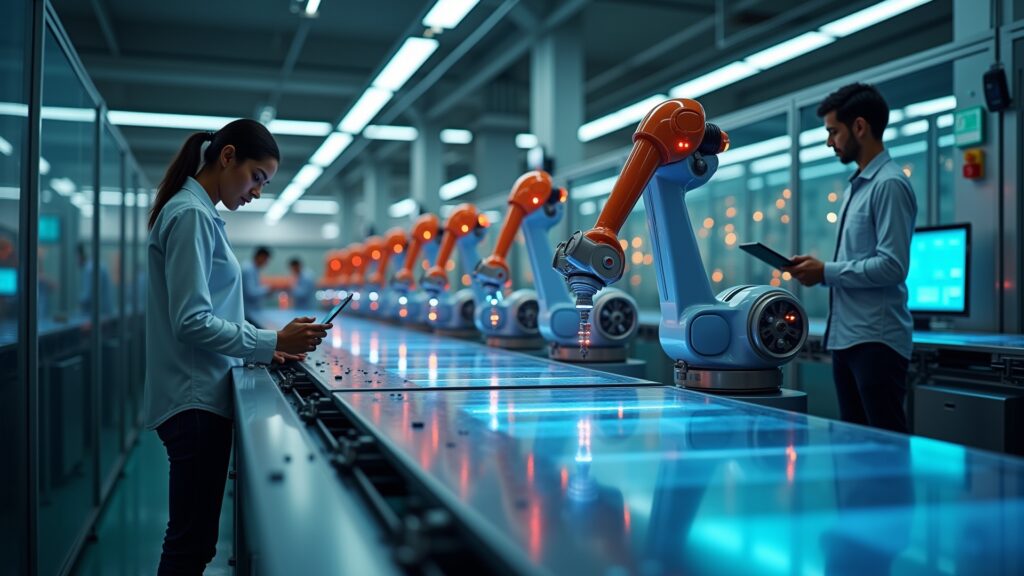
Addressing these challenges requires more than incremental adjustments. You must accelerate the integration of automation, robotics, and industrial AI to reduce labour dependency while enhancing productivity and quality. Smart factory technologies can help you unlock efficiencies even under labour constraints, ensuring you maintain throughput without compromising standards.
Moreover, rethinking your supply-chain is essential. Localising inputs when possible decreases your vulnerability to volatile global prices and logistics uncertainties. Incorporating predictive analytics into procurement and inventory management also equips you to better anticipate demand fluctuations and optimize stock levels.
Impact on India’s Export Competitiveness: A Critical Concern for You
For exporters, the interplay of labour shortages and rising input costs threatens India’s promise as a reliable source. Global buyers are increasingly discerning about cost control, timely delivery, and product quality. Any slip due to operational bottlenecks could push them towards alternatives, even within the emerging China+1 supply diversification.
To stay competitive, strategic investments in capacity expansion — backed by government incentives like Production Linked Incentives (PLI) — become vital. These enable you to fund capital expenditures in automation, energy-efficient machinery, and workforce skill enhancements, creating a stronger ecosystem primed for sustainable growth.
“In manufacturing, scale matters — but resilience and precision are what create durable advantage.”
Policy and Industry Action Points You Should Consider
Policymakers have a pivotal role in reshaping workforce dynamics through targeted skill-building programs that align with current industrial demands. You should actively engage with these initiatives to ensure your talent pipeline meets operational requirements.
Simultaneously, leveraging government incentives for technology adoption and infrastructure upgrades will help boost your operational efficiency and energy usage standards—both vital for long-term competitiveness and sustainability.
Practical Takeaways for Your Manufacturing Business
- Understand the changing labour landscape: Monitor workforce trends closely and invest in training programs that bridge skill gaps.
- Leverage automation and AI: Prioritize scalable technology that enhances productivity and reduces manual dependency.
- Reconfigure supply chains: Localize inputs and incorporate predictive analytics for agility and cost control.
- Capitalize on government incentives: Utilize schemes like PLI to fund modernization, capacity growth, and sustainability projects.
- Strengthen export readiness: Focus on quality, delivery precision, and cost competitiveness to retain global buyers.
Risks and Challenges Ahead
Despite these strategies, risks remain. Labour shortages could deepen if skill development cannot keep pace, and input costs may continue fluctuating due to global uncertainties. Rapid automation adoption demands capital and cultural shifts that some businesses may find difficult to execute smoothly. Overreliance on local inputs may also lead to new supply vulnerabilities if not managed prudently.
“When automation, supply-chain discipline, and execution quality align, manufacturing growth becomes far more sustainable.”
What You Should Watch Next
Keep an eye on evolving government policies aimed at workforce upskilling and incentives that facilitate smart factory implementations. Track global commodity trends as they directly influence your cost base. Observe how major exporters in India adapt – their strategic moves often signal broader industry directions.
Conclusion: Turning Strategic Challenges into Competitive Advantages
Labour shortages and rising input costs are formidable challenges that require your proactive leadership and strategic foresight. By embracing automation, enhancing supply-chain resilience, and investing in skill development, you can transform these pressure points into catalysts for innovation and efficiency. This is your pathway to maintaining India’s manufacturing sector’s growth momentum and export vitality amid a rapidly evolving global industrial landscape.