The recent decline of India’s Manufacturing Purchasing Managers’ Index (PMI) to 53.9 in March 2024, marking its lowest point in four years, demands your immediate strategic attention. While the index still signals expansion, the slowdown signals intensifying cost pressures and operational challenges that could reshape your manufacturing business landscape. As a decision-maker, understanding this trend is crucial to maintaining competitive advantage in your factory, streamlining your supply chain, safeguarding margins, and positioning your operations for sustainable growth in an increasingly complex global market.
Why This Matters to You
This downturn touches every aspect of your manufacturing ecosystem. Rising input costs for raw materials, energy, and logistics are squeezing margins and complicating capacity scaling. Your supply chains face heightened volatility amid global disruptions and a push for China+1 diversification strategies. Moreover, the shift challenges your ability to meet export competitiveness and your ambitions to leverage localisation and value addition policies.
In your role, this means you must rethink operational priorities with a keen focus on cost efficiency, productivity boosts, and supply chain robustness. The Manufacturing PMI is not just a number—it’s a diagnostic signal revealing the health of production activity and a bellwether for investment and policy decisions that directly impact your bottom line.
What Is Happening in the Indian Manufacturing Sector?
The PMI, a composite indicator measuring new orders, output, employment, and supplier delivery times, staying above 50 means growth, but the slide from previous highs to 53.9 indicates decelerating momentum. This reflects how inflationary pressures and higher input costs—in energy, materials, and wages—are increasingly palpable. Manufacturers are feeling the strain as pressures build, and the ability to pass on costs to customers is constrained by competitive global market realities.
Key Impacts on Business and Manufacturing Strategy
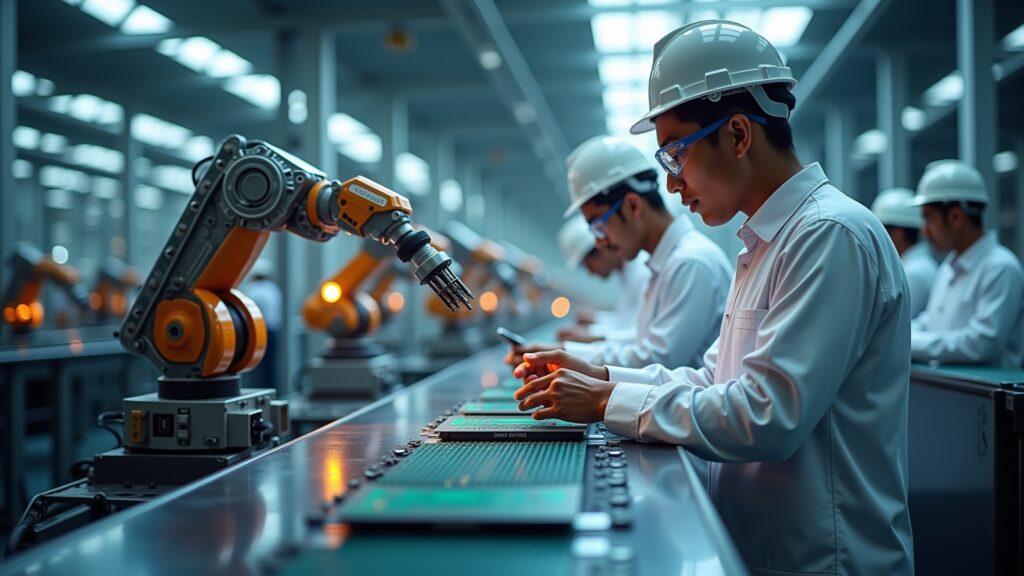
For manufacturing leaders like you, this slowdown is a call to elevate operational sophistication. Escalating expenses urge you to pivot towards automation and smart technology adoption quicker than planned to crush inefficiencies. Robotics, industrial AI, predictive maintenance, and integrated smart-factory systems are no longer just modernization buzzwords—they are essential to sustain competitiveness and margin protection.
Additionally, bolstering your supply chain resilience becomes an imperative. The ongoing global realignment of supply chains, propelled by geopolitical shifts and trade tensions, places a premium on trusted local suppliers and effective diversification strategies aligning with national incentives and localisation goals.
Strategic Analysis: Navigating Cost and Complexity
Cost inflation creates a dual challenge: keep production volumes scaling without eroding profitability. This requires a clear strategy integrating technology-driven productivity gains, workforce upskilling to leverage automation, and disciplined inventory and supplier management. Manufacturers poised to invest in scalable, energy-efficient production technologies stand to mitigate risks linked to volatile raw material prices and tightening regulatory environments.
“In manufacturing, scale matters — but resilience and precision are what create durable advantage.”
Policy also plays a pivotal role. The Indian government’s schemes such as the Production Linked Incentive (PLI) program and infrastructure initiatives are critical enablers that you must actively engage with to offset cost pressures and accelerate capacity building. Keeping track of evolving fiscal policies and energy efficiency mandates is key to optimizing your operational cost structure and capital investment decisions.
Practical Takeaways for Manufacturing Leaders
- Prioritize technology adoption that drives operational efficiency—automation, AI analytics, and smart manufacturing technologies can both lower costs and increase output quality.
- Enhance supply chain resilience by developing trusted domestic supplier networks and diversifying sources in line with China+1 strategies.
- Reassess workforce development programs to align skillsets with advanced manufacturing technologies and lean operational practices.
- Engage proactively with government incentives and monitor policy shifts that could influence cost structures and expansion potential.
- Focus on sustainability and energy efficiency to not only reduce costs but also strengthen your market positioning amid growing global demand for greener manufacturing.
Expert Perspective
“The real edge is not only in producing more, but in producing faster, smarter, and closer to where demand is shifting.”
“When automation, supply-chain discipline, and execution quality align, manufacturing growth becomes far more sustainable.”
Risks and Challenges Ahead
You face the challenge of balancing short-term cost pressures with long-term strategic investments. Failure to act decisively could expose your operations to margin erosion, lost capacity expansion opportunities, and weakening export competitiveness. External factors such as ongoing global supply chain disruptions and inflation volatility add layers of uncertainty that require agile decision-making.
What You Should Watch Next
Keep a close eye on quarterly PMI updates as early indicators of changing industrial momentum. Track government policy developments around infrastructure enhancements and fiscal incentives, particularly relating to energy and production-linked schemes. Monitor global commodity price trends and geopolitical shifts that might influence raw material costs and logistics. Most importantly, evaluate how your technology and supply chain investments are paying off in productivity and cost control metrics.
Conclusion: Seizing Opportunity Amid the PMI Slowdown
India’s Manufacturing PMI March 2024 dip is more than a numerical footnote—it signals a critical juncture for you as an industrial leader. It underscores rising cost burdens and operational complexities that challenge existing business models but also spotlight areas for transformational growth. By embracing advanced technologies, reinforcing supply chain resilience, aligning with policy incentives, and committing to sustainable practices, you can convert these pressures into strategic advantage. The future of Indian manufacturing will be shaped by how well you navigate this transitional phase with foresight and precision.