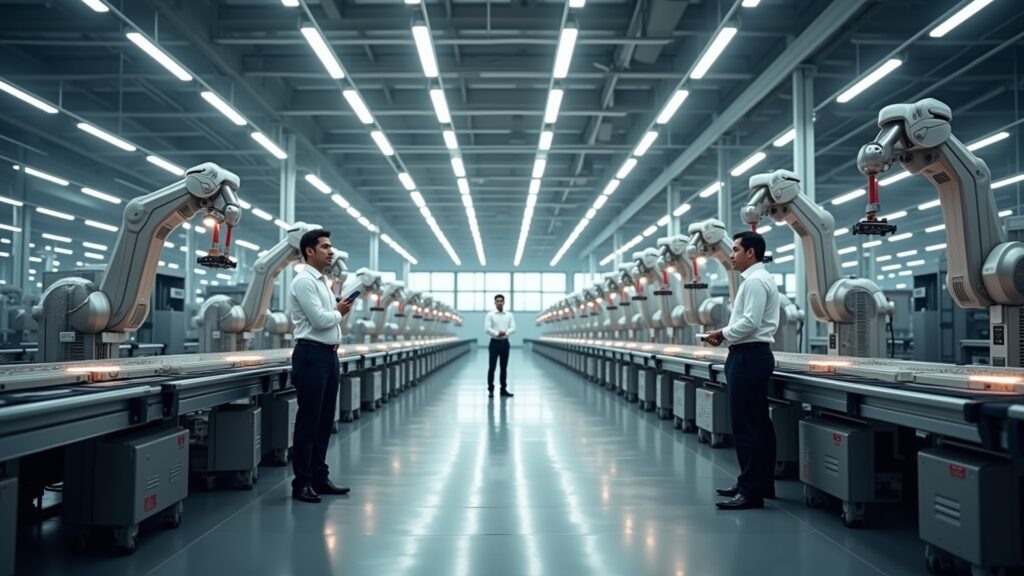
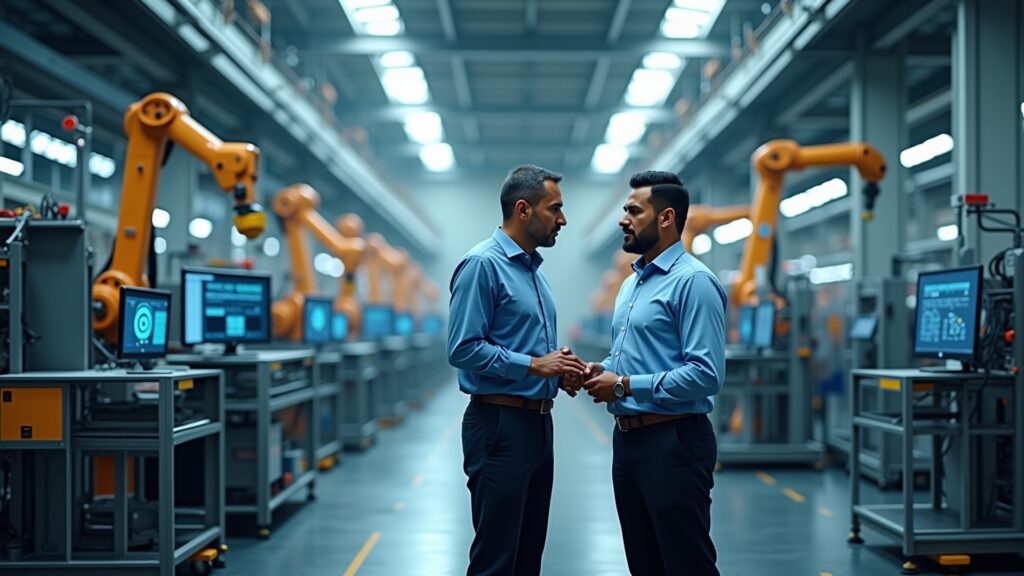
As a key player in India’s manufacturing ecosystem, you’re undoubtedly watching recent data signaling the slowest expansion in four years with keen attention. This slowdown in India’s manufacturing growth is not just a statistical blip—it’s a critical inflection point that directly impacts your strategies around factory performance, supply chains, investment decisions, and global competitiveness. Understanding why this deceleration matters and how to respond will determine whether your business simply weathers the change or capitalizes on it for sustained long-term advantage.
Why This Manufacturing Growth Slowdown Matters to You
The manufacturing sector underpins your operational footprint, export capability, and value creation. A slowdown signals shifts in market dynamics, cost structures, and competitive intensity that cannot be ignored. Delays or reductions in growth ripple across your production planning, supplier relationships, and capital deployment. For investors, it means recalibrating risk assessments amid evolving industrial sentiments. For plant leaders and policymakers, it’s a red alert to pivot strategies toward resilience and innovation rather than volume-centric expansion.
Put simply, your business’s ability to adapt to these structural shifts will determine your capacity to maintain productivity, operational efficiency, and global market share in an increasingly competitive and digitized manufacturing world.
What Is Happening: The Current State of India’s Manufacturing Sector
India’s manufacturing growth slowdown is a result of a complex interplay of global and domestic forces. On a global stage, supply chains are undergoing realignment, accelerated by the China+1 diversification strategy, creating both opportunities and heightened competition. This transition means your sourcing strategies and supplier ecosystems face greater complexity and cost pressures.
Domestically, manufacturers contend with rising input costs and inflationary pressures, impacting margins and capital expenditure decisions. The hesitancy to fully invest in emerging technologies such as robotics, industrial AI, and smart factory systems further compounds the cooling growth momentum. While government incentives and infrastructure investments provided a growth lift in previous years, the current environment demands more nuanced strategic positioning.
Key Impacts on Business and Manufacturing Operations
This growth dip is not just about numbers—it reshapes how you approach operational excellence and competitive differentiation. High-value production and superior productivity driven by automation and digital integration become non-negotiable. Supply chain resilience gains critical importance to cushion against global disruptions, while localization efforts help reduce dependency on volatile external markets.
Export competitiveness hinges on your ability to leverage policy incentives such as Production Linked Incentive (PLI) schemes while aligning with global standards for energy efficiency and sustainability. These factors influence your long-term capital allocation and capacity expansion plans, challenging you to balance short-term caution with strategic investments.
Strategic Insight: Turning Slowdown Into Opportunity
Rather than viewing the slowdown as stagnation, you can see it as a transformative moment demanding a shift from volume-driven growth to operational excellence driven by innovation. The integration of industrial AI and robotics, accelerated digitization of manufacturing lines, and smart factory initiatives can unlock efficiency gains and quality improvements that set your operations apart.
Additionally, fortifying your supply chain by enhancing localization and embedding resilience measures will mitigate risks from global disruptions. Policy frameworks supporting industrial infrastructure expansion and workforce upskilling are vital levers you should engage with actively to future-proof production capacity.
“In manufacturing, scale matters — but resilience and precision are what create durable advantage.”
Practical Takeaways for Manufacturing Leaders and Investors
- Prioritize technology adoption: Invest selectively in robotics, industrial AI, and smart factory systems that demonstrably improve efficiency and flexibility.
- Enhance supply chain resilience: Evaluate your sourcing networks with a focus on localization to reduce dependency risks.
- Leverage government incentives: Actively engage with schemes like PLI to maximize capacity expansion and export growth.
- Focus on energy efficiency and sustainability: Align operations with global standards to attract international capital and reduce operational costs.
- Build workforce capabilities: Invest in upskilling programs to support automation adoption and innovation.
- Monitor global trade dynamics: Adjust strategies in response to supply chain realignments and evolving market demand.
“The real edge is not only in producing more, but in producing faster, smarter, and closer to where demand is shifting.”
Risks and Challenges You Should Consider
The slowdown reflects deeper challenges such as inflationary pressures and uneven technology uptake that could prolong growth hesitancy. Failure to invest boldly in automation and process innovation risks leaving your factory operations behind emerging global competitors. Supply chain disruptions remain a persistent risk given ongoing geopolitical tensions and trade realignments.
Additionally, policy execution delays or lack of alignment between industry needs and government incentives could inhibit your ability to scale efficiently. Balancing short-term cost pressures with the necessity for long-term strategic investments is a delicate challenge you need to manage carefully.
What You Should Watch Next
Stay alert to signals from policy announcements around industrial infrastructure investment and workforce development programs aimed at supporting smart factory adoption. Monitor how supply chain diversification efforts evolve, particularly the impact of China+1 strategies on your sourcing and export markets.
Technological innovation adoption rates, especially in robotics and AI, will be a leading indicator of who captures growth opportunities as the sector evolves. Finally, keep tracking inflation trends and input cost fluctuations to adjust your operational and procurement strategies proactively.
“When automation, supply-chain discipline, and execution quality align, manufacturing growth becomes far more sustainable.”
Conclusion: Navigating the India Manufacturing Growth Slowdown Strategically
The current slowdown in India’s manufacturing growth is more than a momentary pause—it’s a pivotal juncture that calls for sharp strategic recalibration. For you, whether as a manufacturing executive, plant leader, investor, or policymaker, the focus must shift to innovation-driven productivity, resilient and localized supply chains, and judicious capital deployment aligned with policy frameworks.
India’s manufacturing ecosystem holds robust potential, but capturing it requires you to move beyond volume and embrace smarter, sustainable, and technology-enabled operations. This growth slowdown is your strategic signal—to act decisively, innovate relentlessly, and position your business at the forefront of global manufacturing competitiveness in an increasingly complex landscape.