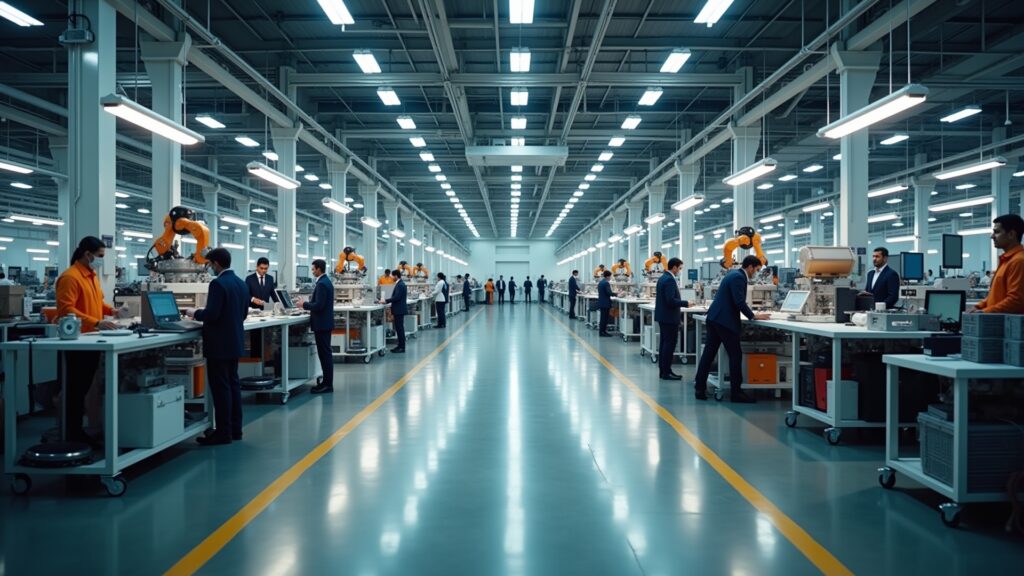
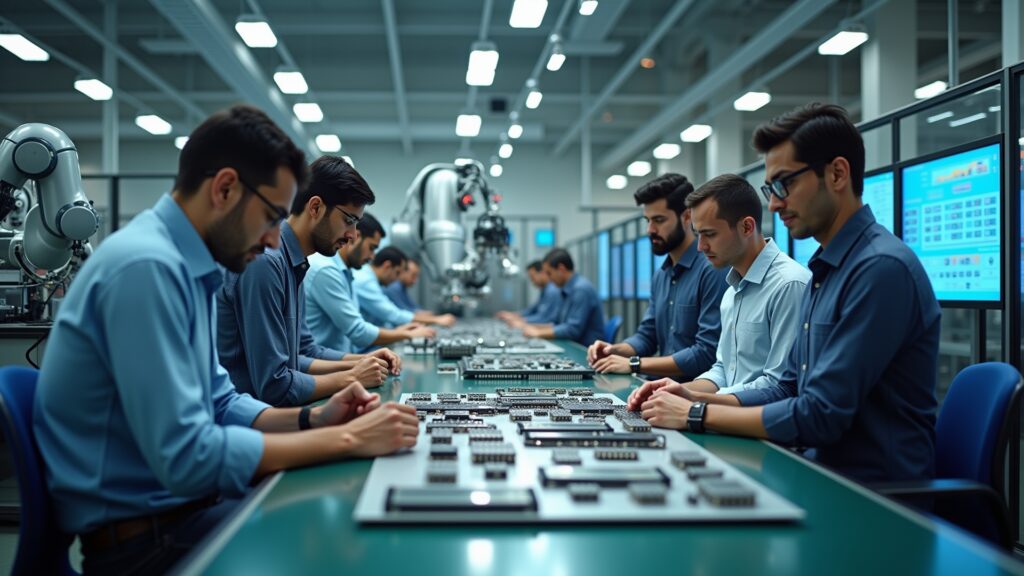
As a manufacturing leader or investor in India’s industrial ecosystem, you’re witnessing a defining moment in electronics manufacturing driven by the Production Linked Incentive (PLI) scheme. This policy is not just a government program; it’s a strategic catalyst reshaping how Indian electronics manufacturers compete globally, innovate locally, and scale production with a sharp focus on sustainability and export competitiveness.
Why This Momentum in Electronics Manufacturing Matters to You
If your business thrives on manufacturing precision, supply chain reliability, or export-led growth, the rise of India’s electronics sector under the PLI scheme demands your attention. This movement directly affects your factory’s strategic choices—whether it’s integration of automation technologies, export market positioning, or sourcing from a progressively localised supply chain. For investors, the shifting landscape signals emerging opportunities in industrial innovation, capacity expansions, and new market frontiers. Essentially, this momentum rewrites the playbook for manufacturing competitiveness in India and beyond.
What Is Happening in India’s Electronics Manufacturing Landscape
The PLI scheme is accelerating a sweeping industrial upgrade focused on boosting domestic production and pragmatically reducing import dependencies. Indian electronics manufacturers are emerging as key architects of this transformation. They are not only expanding capacity but embedding next-generation manufacturing techniques—such as automation, industrial AI, and smart factory frameworks—to enhance productivity, quality, and adherence to global standards.
The real industrial scale-up also involves systemic supply chain resilience, localisation of key components, and investment in skilled workforce development, all supported by targeted policy incentives and infrastructure enhancements. This ecosystem-wide growth is positioning India as a vital player amidst the ongoing global supply chain realignment, often termed the China+1 strategy.
Core Business and Manufacturing Impacts to Observe
- Localisation and Value Addition: Manufacturers are increasing domestic content dramatically, which strengthens your sourcing security and reduces exposure to global supply shocks.
- Advanced Manufacturing Integration: The adoption of automation, robotics, and AI-driven process improvements is driving higher throughput, better quality control, and more flexible production lines.
- Export Competitiveness: Enhanced quality standards and capacity growth are enabling Indian electronics producers to break into higher-value global markets.
- Supply Chain Resilience: Investments in logistics and supplier ecosystems foster reliability and agility critical for your operations.
- Sustainability Focus: Energy-efficient manufacturing practices and workforce skill development cultivate long-term business resilience.
Strategic Insights: What This Means for You in Manufacturing Leadership
India’s PLI-driven electronics manufacturing renaissance underscores a vital strategic lesson: scale alone does not guarantee industrial leadership. It’s the convergence of automation maturity, supply chain depth, and innovation ecosystems that defines durable advantage. You should focus not only on ramping production but embedding smart factory principles that fuse technology, workforce capacity, and quality assurance.
Moreover, the growing localisation drive serves as a blueprint for developing trusted, cost-effective component suppliers close to your factory footprint. This proximity reduces risk, improves responsiveness, and drives cost efficiency. You will also find that aligning investments with policy frameworks and infrastructure expansions amplifies your capital productivity and export potential.
“In manufacturing, scale matters — but resilience and precision are what create durable advantage.”
“The real edge is not only in producing more, but in producing faster, smarter, and closer to where demand is shifting.”
Practical Takeaways for Manufacturing Executives and Investors
- Understand the PLI scheme’s evolving guidelines and leverage industrial incentives to optimize capital deployment and capacity expansion.
- Monitor adoption trends in automation, AI, and smart factory technologies to sustain quality improvements and operational efficiency.
- Prioritize building resilient and localised supply chains to guard against global disruptions.
- Invest in workforce skill development to ensure your plant accesses next-generation manufacturing expertise.
- Focus on exporting readiness by enhancing quality and compliance capabilities aligned with international standards.
Expert Perspective: Aligning Policy and Execution for Industry Transformation
The PLI scheme exemplifies how targeted policy can translate into industrial success when paired with strategic execution on the factory floor and across supply chains. Manufacturers succeeding under this framework illustrate a pragmatic blend of policy responsiveness, technology adoption, and business model innovation.
“When automation, supply-chain discipline, and execution quality align, manufacturing growth becomes far more sustainable.”
Risks and Challenges to Navigate
Despite the robust industrial momentum, challenges persist. You must be vigilant against overextension in capacity growth without commensurate demand, potential supply chain bottlenecks, and workforce skill gaps. Moreover, sustaining energy efficiency and managing the environmental footprint amid rapid production scale-up requires continuous innovation and investment.
Policymakers and business leaders alike must also guard against sudden regulatory shifts and ensure that infrastructure development aligns seamlessly with industrial needs.
What You Should Watch Next
Keep a close eye on how electronics manufacturers expand advanced manufacturing technology footprints and deepen local supplier networks. The interplay between industrial AI deployments and workforce upskilling will be crucial in determining sustained productivity gains. Additionally, evolving export frameworks and bilateral trade agreements will influence global market access.
Strategic partnerships, mergers, and acquisitions within the electronics ecosystem may also signal shifts in competitive positioning and resource consolidation.
Conclusion: India’s Electronics Manufacturers as Architects of Industrial Momentum
Your manufacturing business stands at a crossroads where India’s electronics manufacturers under the PLI scheme are not just recipients of incentive-driven growth—they are shaping a future-ready, globally competitive electronics sector. Their strategic integration of automation, localisation, and export focus offers a blueprint for enduring industrial success.
By aligning your operational strategies with this transformative momentum, you can harness emerging opportunities for scale, innovation, and global competitiveness, positioning your company firmly in the next chapter of India’s manufacturing evolution.