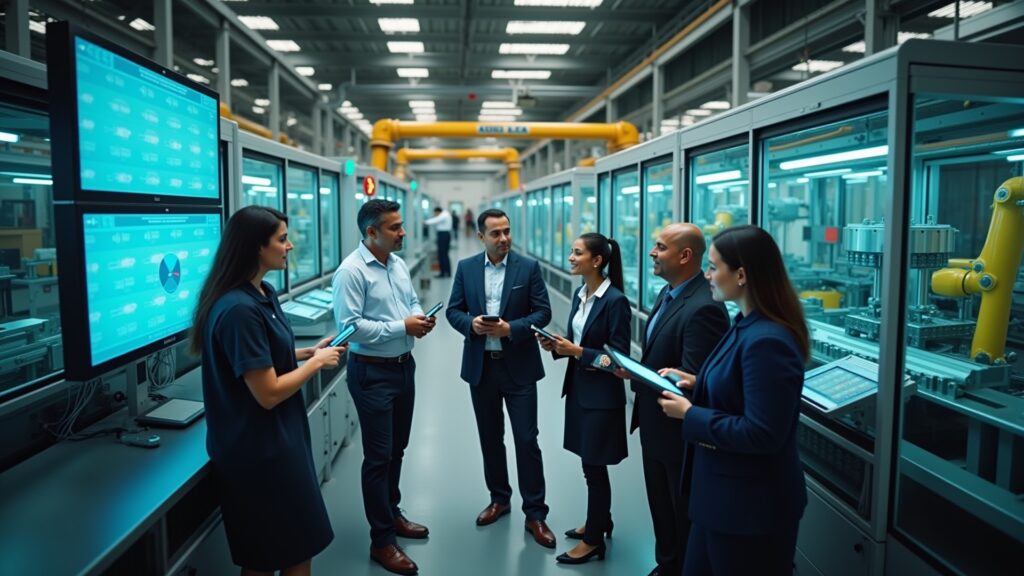
As you steer your manufacturing business in India’s rapidly evolving industrial landscape, the government’s ambitious goal to boost manufacturing’s share of GDP to 25% presents a critical inflection point. This target is not just a number—it represents a profound transformation in how India competes globally, innovates inside its factories, and builds resilient supply chains. For you, as a founder, plant leader, or investor, the question is clear: how can your operations align with and benefit from this vision? The answer increasingly lies in adopting AI-driven automation to scale productivity, enhance quality, and drive operational excellence.
Why This Ambition Matters to Your Manufacturing Enterprise
The drive to elevate manufacturing’s GDP contribution is a strategic response to global trends reshaping supply chains and industrial competitiveness. With companies diversifying away from traditional hubs under the China+1 strategy, India is positioning itself as a preferred manufacturing destination. However, this opportunity demands more than added capacity—it requires factories that are smart, agile, and efficient. By leveraging AI in manufacturing India, you can break past legacy constraints and deliver the precision, speed, and consistency that global markets expect.
“In manufacturing, scale matters — but resilience and precision are what create durable advantage.”
What Is Happening: The Rise of AI in India’s Manufacturing Sector
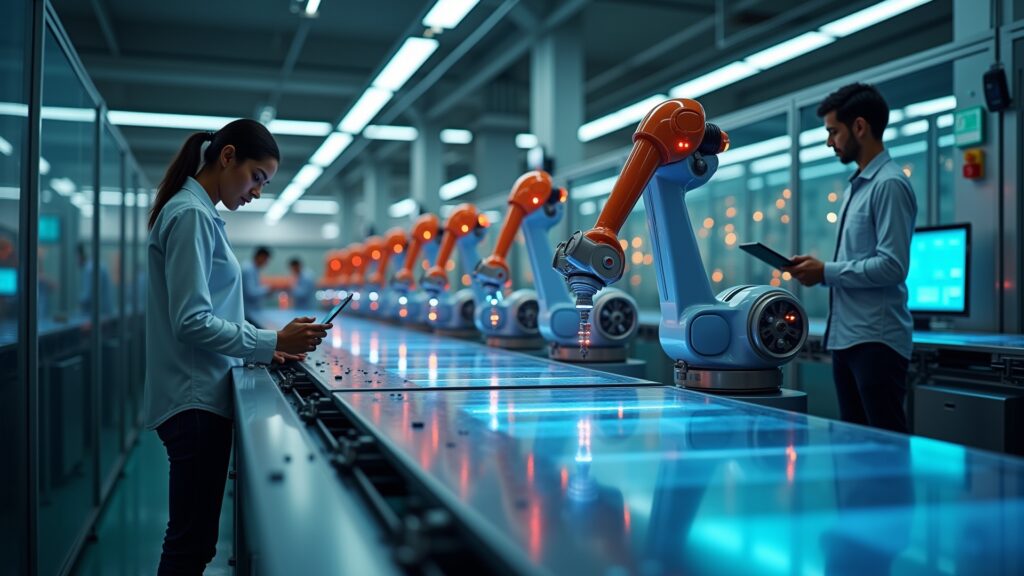
Artificial intelligence technologies including machine learning, predictive analytics, and computer vision are no longer theoretical concepts—they are practical tools transforming factory floors. By embedding AI-powered systems into your production lines, you shift from reactive to predictive operations. This means spotting potential equipment failures before they halt production, ensuring consistent product quality, and optimizing material and workforce allocation dynamically. These improvements directly translate into increased throughput and cost savings—essential for competing in tighter export markets and adhering to stricter global standards.
Key Impacts on Your Business and Factory Operations
- Productivity and Cost Efficiency: AI analytics illuminate process inefficiencies and bottlenecks, allowing you to consistently refine operations under lean manufacturing principles. This leads to better unit economics and operational agility.
- Supply Chain Resilience and Localisation: AI enhances visibility across your supply chain, enabling proactive risk management and flexible sourcing. This supports India’s localisation ambitions and reduces vulnerability to international disruptions.
- Quality and Compliance: Real-time AI-driven quality control ensures your products meet exacting standards critical for global market acceptance.
“The real edge is not only in producing more, but in producing faster, smarter, and closer to where demand is shifting.”
Strategic Insights: What This Means for Your Competitive Position
Your journey to align with the 25% manufacturing GDP goal involves integrating AI not just as an automation tool but as a central element of industrial intelligence. This means leveraging data-driven insights for strategic decision-making—from predictive maintenance scheduling to dynamic production planning and supplier risk management. Such a transformation equips your factory to be more adaptive, reduces downtime, and fosters continuous innovation.
Investors and policymakers recognize this imperative. Incentive schemes like Production Linked Incentives (PLI) and targeted infrastructure development increasingly reward technology adoption and value addition. As a result, AI integration signals not only operational maturity but also long-term scalability and investment readiness.
Practical Takeaways: Steps You Should Consider
- Prioritize AI Integration: Evaluate current operations to identify AI opportunities—start with predictive maintenance, quality control, and process analytics.
- Upskill Your Workforce: Build capabilities that complement AI tools, fostering a workforce adept in managing intelligent systems.
- Collaborate with Technology Providers: Partner with AI technology firms that understand manufacturing nuances to tailor solutions effectively.
- Focus on Data Quality: Invest in robust data capture methods to maximize AI’s predictive and analytical power.
- Align with Policy Incentives: Monitor government programs supporting AI adoption and capacity expansion to leverage financial and infrastructure benefits.
Expert Perspective
“When automation, supply-chain discipline, and execution quality align, manufacturing growth becomes far more sustainable.”
Risks and Challenges to Navigate
While AI promises significant gains, it is not a quick fix. Implementation demands careful change management and upfront investment, particularly in upgrading legacy equipment and training personnel. Beware of adopting AI tools without a clear strategy aligned to your specific operational challenges. Data privacy and cyber security also become more critical as digital footprints expand. A cautious, phased approach that balances ambition with practical readiness will mitigate these risks.
What You Should Watch Next
Keep an eye on emerging AI innovations tailored to industrial use, government regulatory updates, and evolving supply chain dynamics shaped by geopolitical shifts. Early adopters who can demonstrate measurable ROI on AI investments will set benchmarks influencing capital allocation and industrial partnerships. Your engagement with these trends will shape the competitive positioning of your manufacturing operations in India’s new growth chapter.
Conclusion
India’s aspiration to grow manufacturing to 25% of GDP is a transformative mandate offering you unprecedented opportunity—yet unlocking its full value requires embracing AI in manufacturing India. By integrating intelligent automation, you accelerate productivity gains, build resilient supply chains, enhance product quality, and position your factory for global competitiveness. This is not merely about scaling up capacity; it’s about scaling up with foresight, precision, and innovation.
As you plan your strategic roadmap, placing AI-driven automation at its core will help ensure that your manufacturing enterprise does not just participate in India’s industrial growth story but leads it.