As a manufacturing leader or investor, you’ve certainly witnessed how India’s manufacturing narrative has long been anchored on one fundamental premise: its large workforce offering low-cost labour. But if you continue to rely solely on this legacy advantage, you risk missing the evolving dynamics that will dictate tomorrow’s global industrial landscape. Your factory’s competitiveness, your supply chain resilience, and your export potential hinge now on something broader and more complex than labour cost alone. The future demands a strategic shift.
Why This Matters to You
Your business is no longer just competing in a domestic market but within a fiercely competitive global arena where technology, quality, and agility increasingly overshadow labour costs. The era when cheap labour could singlehandedly attract investments and offset operational inefficiencies is fading. For your manufacturing unit to thrive, scale, and export at higher value, you must leverage automation, AI, and smart factory practices that enhance precision, speed, and cost efficiency.
Moreover, as a leader in manufacturing, your decisions on capital allocation, workforce training, and operational strategy will determine whether your enterprise is a global contender or a local laggard. Aligning with government policy shifts and industrial incentives can further fortify your competitive position.
What Is Happening: Beyond Low Cost Labour
India’s manufacturing sector is undergoing a critical transition. The traditional pull factor of low-cost labour is increasingly complemented—and at times overtaken—by factors such as:
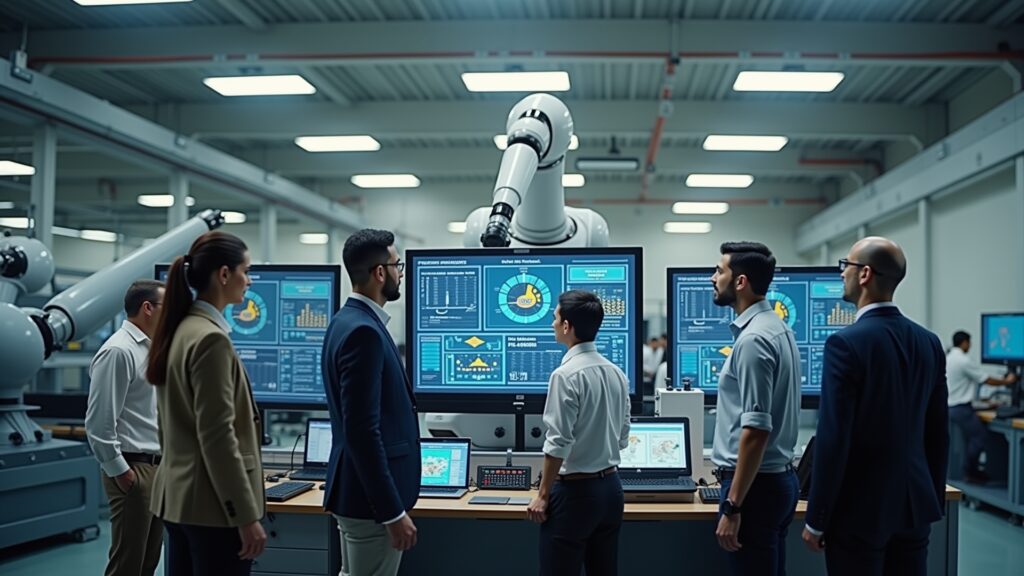
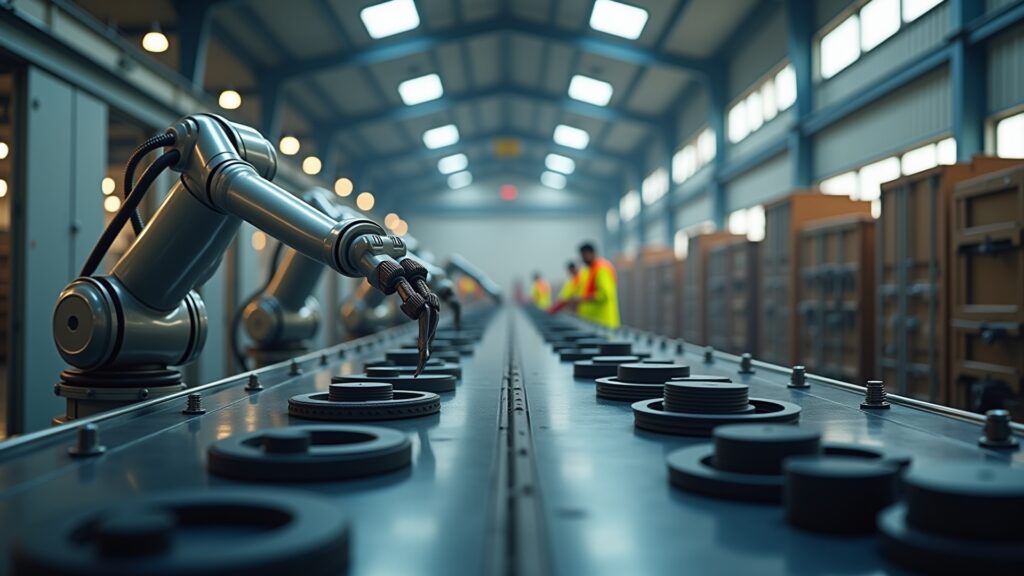
- Automation & Robotics: Factories are embedding robotics and mechanisation to enhance precision and reduce variability.
- Industrial AI & Predictive Maintenance: Advanced analytics are improving operational uptime and driving down costs.
- Workforce Upskilling: Skilled manpower capable of managing and innovating with new technologies is becoming essential.
- Policy-driven Incentives & Infrastructure: Production Linked Incentives (PLI) and infrastructural upgrades promote digitisation and smarter manufacturing practices.
Key Business and Manufacturing Implications
For you, the implications are clear and urgent. Leveraging advanced manufacturing technologies will enable enhanced productivity and superior product quality—two critical dimensions for capturing international market share. This move away from labour cost dependency to technology-centric manufacturing will improve your operational resilience against global supply chain shocks and fluctuating labour markets.
Exports will become more about delivering consistent performance and high-quality products shaped by local value addition rather than chasing minimal labour costs. The “China+1” strategy highlights global buyers’ demand for reliable, automated, and high-quality supply sources—presenting India with an opportunity if you adapt accordingly.
Strategic Analysis: Building a Resilient Competitive Advantage
Your strategic focus should extend beyond mere cost-cutting. Instead, invest in creating smart factories where automation blends with human expertise, supported by AI-driven decision-making. Industrial workforce transformation through targeted training and skills development programs must be integral to your growth plans.
Policy alignment is equally critical. Ensure your factory operations take full advantage of Production Linked Incentives and infrastructure modernization initiatives aimed at energy efficiency and sustainability. These efforts will contribute not only to your bottom line but also to your brand’s global standing and investor confidence.
“In manufacturing, scale matters — but resilience and precision are what create durable advantage.”
Practical Takeaways: What You Should Do Next
- Assess your current dependence on low-cost labour and identify areas where automation and smart technologies can improve efficiency.
- Develop a roadmap for workforce upskilling that combines technical training with digital literacy, empowering your teams to operate advanced machinery.
- Engage proactively with government incentive programs like Production Linked Incentives to leverage financial and infrastructural support for technology adoption.
- Focus on local value addition by integrating supply chain partners and adopting sustainable manufacturing practices that align with global ESG standards.
- Invest in predictive maintenance and AI tools to enhance operational uptime and reduce unplanned costs, thus improving your factory’s reliability.
“The real edge is not only in producing more, but in producing faster, smarter, and closer to where demand is shifting.”
Risks and Challenges to Consider
The transition beyond cheap labour is not without risks. High initial capital expenditures for automation and AI, potential workforce resistance to change, and the challenge of aligning evolving policies can slow your progress. Additionally, a fragmented supply chain or inconsistent infrastructure can constrain the benefits of technology adoption. Mitigating these risks requires clear change management, strategic partnerships, and long-term vision.
What You Should Watch Next
Keep an eye on how government policy evolves—particularly incentives that support digital transformation and sustainable practices. Monitor advancements in industrial AI and robotics tailored to your sector, and track emerging export market requirements emphasizing quality, compliance, and supply chain transparency.
Watch how your competitors and supply chain partners are adapting to the China+1 manufacturing shift and consider strategic collaborations that enhance your innovation and scaling capabilities.
“When automation, supply-chain discipline, and execution quality align, manufacturing growth becomes far more sustainable.”
Conclusion: Positioning Your Manufacturing for Long-Term Success
Your manufacturing business stands at a decisive crossroads. India manufacturing beyond cheap labour is not just a slogan but an imperative strategy for surviving and thriving in the decades ahead. By embracing advanced technologies, fostering a skilled workforce, and aligning with robust industrial policies, you can transform your operation into a smart, resilient, and globally competitive factory.
This strategic recalibration will enable you to meet the sophisticated demands of international markets, enhance export competitiveness, and build a sustainable industrial legacy well beyond the limitations of cost-driven competition.