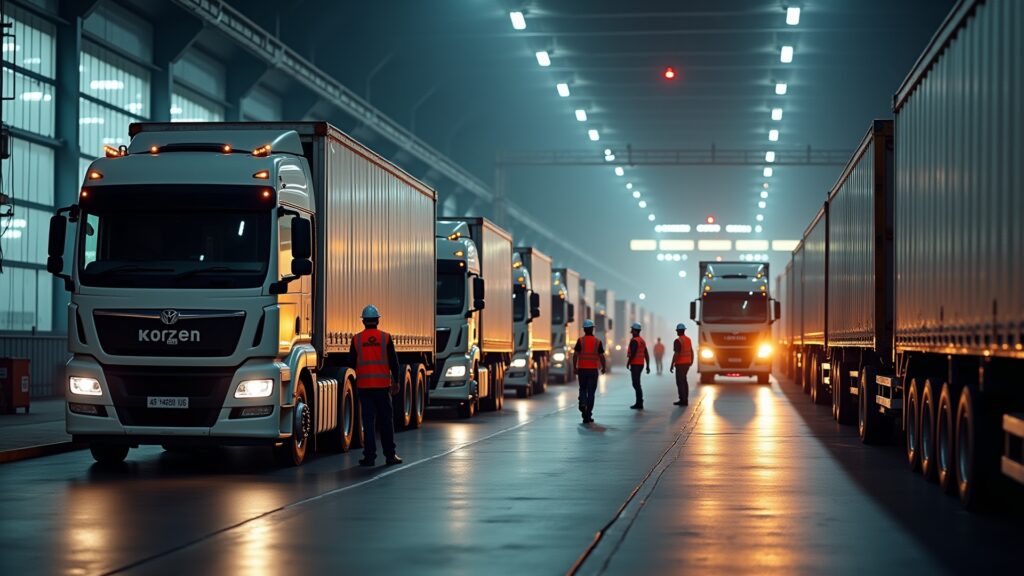
As a leader in manufacturing or industrial operations, you understand that logistics form the backbone of your enterprise’s efficiency and competitiveness. Today, one critical, yet often overlooked, input—urea—is emerging as a potential disruptor to diesel-powered transport, a lifeline for your supply chains. If the urea supply chain falters, the ripple effects could stall diesel fleets, delay deliveries, and complicate production schedules, directly impacting your manufacturing business and export ambitions in India’s fast-evolving industrial landscape.
Why This Development Matters to You
In your factory or plant, diesel vehicles are not just transport assets; they are essential cogs moving raw materials in and finished products out. Disruptions in urea supply, which is pivotal for selective catalytic reduction (SCR) technology on diesel engines, threaten to immobilize this fleet. Understanding this vulnerability equips you to anticipate operational risks and safeguard your supply chain’s resilience and agility.
As your manufacturing enterprise eyes expansion, local and global market competitiveness hinges on logistics reliability. A hiccup here is a risk not just to timely deliveries but to your brand reputation, cost structures, and export commitments. The urgency for proactive strategy—grounded in localisation, contingency planning, and technology adoption—has never been greater.
What Is Happening with Urea and Diesel Transport
Diesel commercial vehicles in India commonly use SCR systems that rely on urea solutions to curb nitrogen oxide (NOx) emissions and comply with stringent environmental standards. Urea acts as a reducing agent in this emission-control process. Any break in the urea supply chain—whether from production shortfalls, distribution inefficiencies, or policy shifts—poses an immediate operational threat. Without this essential chemical, diesel vehicles could be forced off the road, triggering wide-scale transportation slowdowns.
Key Impacts on Manufacturing and Market Dynamics
Your production lines are only as strong as the logistical networks feeding them. A disruption in diesel transport due to urea shortages will impact:
- Supply Chain Resilience: Elevated risks of delays and bottlenecks will cascade down your material sourcing and product dispatch timelines.
- Operational Efficiency: Idle fleets translate to increased lead times and rising freight costs, hurting margins and planning accuracy.
- Export Competitiveness: Indian manufacturers striving for global markets might face missed deadlines fulfilling international contracts.
- Policy and Compliance: Regulatory pressures on emission compliance intersect with industrial policy incentives geared towards sustainability and localisation.
Strategic Insights: Preparing Your Manufacturing Enterprise
To mitigate this emerging risk, you might consider:
- Diversification of Fuel and Vehicle Technologies: Explore alternative fuel options and hybrid or electric vehicle fleets to reduce dependency on diesel and urea.
- Supply Chain Contingency Planning: Develop strategic reserves, alternative suppliers for urea, and acute monitoring of upstream vulnerabilities.
- Investment in Smart Logistics: Leverage industrial AI, predictive analytics, and real-time fleet management to optimize routes and fuel usage under constrained conditions.
- Stakeholder Engagement: Collaborate with policymakers and industry bodies to support local urea production and advocate for streamlined distribution policies aligned with manufacturing needs.
“In manufacturing, scale matters — but resilience and precision are what create durable advantage.”
Practical Takeaways for Manufacturing Leaders
- Monitor urea supply trends closely as a leading indicator for diesel transport viability.
- Incorporate urea supply risk assessments into your broader supply chain risk management framework.
- Accelerate exploration of green and cleaner transport technologies as part of medium- and long-term strategies.
- Engage with policymakers advocating for production-linked incentives (PLI) supporting supply chain localization, including critical raw materials.
- Enhance operational agility through investments in predictive analytics and smart factory logistics systems.
Expert Perspective
“The real edge is not only in producing more, but in producing faster, smarter, and closer to where demand is shifting.”
“When automation, supply-chain discipline, and execution quality align, manufacturing growth becomes far more sustainable.”
Risks and Challenges to Watch
While addressing urea supply issues, remain cognizant of broader challenges:
- Supply Chain Complexity: Urea production intricacies coupled with agricultural demand can tighten availability unpredictably.
- Policy Lag: Infrastructure and incentivization may not keep pace with industry requirements, causing transitional friction.
- Cost Pressure: Sudden shifts in urea prices can increase operational costs for diesel transport and, subsequently, the cost of goods manufactured.
What You Should Watch Next
Keep an eye on government announcements regarding industrial policy updates, new PLI schemes targeting chemical manufacturing, and distribution reforms that affect urea availability. Additionally, track developments in alternative vehicle technologies and strategic partnerships in logistics innovation. Your ability to anticipate and adapt to these changes will be crucial in maintaining competitive advantage.
Conclusion: Securing Your Manufacturing Logistics for the Future
Urea supply disruption in diesel transport is not a distant threat—it is an immediate strategic concern that could impact your manufacturing supply chain, productivity, and market positioning. By comprehending this risk and integrating robust mitigation measures—from supply diversification to technological adoption—you can fortify your operations against uncertainty. This approach will enable your manufacturing business to thrive sustainably in India’s dynamic industrial environment.
The nexus of chemical inputs, emission compliance, and transport efficiency underscores the complex interdependencies that define modern manufacturing logistics—making your proactive response not just advisable but essential.